OpenTracker
This is the semi fork (2.2.3-semi), on top of OpenTracker 2.2.3. What it adds is listed right below, under New in the semi fork; the full guide is FORK.md. Polyend Backstage feature requests (all 254 Tracker topics) and what this fork can do about them: FEATURE_REQUESTS.md, the doable ones with notes: YAPILABILIR.md.
OpenTracker is an open-source, clean-room firmware for the original Polyend Tracker, written from behavioural specifications. It contains no Polyend code, fonts, icons or graphics, and is not affiliated with or endorsed by Polyend.
New in the semi fork
Image: PolyendTrackerOTs223.ptf (installs like the upstream image, see Install). Everything
the generators write is ordinary steps and step FX, so the patterns also play on stock 1.9.x
and on the Tracker Mini. Full guide with every parameter: FORK.md.
Latest update (2.2.3-semi.6): Polyend Community Edition compatibility, .ptfx plugins
Polyend published the original firmware's source as the Tracker Community Edition (polyend/tracker-ce). This release reads what CE writes, checks the fork's guesses against it, and runs CE's Sample Editor plugins. Details: FORK.md, Polyend CE.
- .ptfx Sample Editor plugins: files in the card's
Effectsfolder are listed after the built-in effects, with their parameters on page 2 (Preview, Apply, Undo as usual). The same files run on CE (Original, Tracker+, Mini). The fork's Transcode, DCT Crush, Radio, Clipper, Paulstretch and Granular come as plugins too (OT_*.ptfxin the release), so CE users get them. - CE projects open: CE's pattern files (8-byte steps with volume and micro-move) load, V / m going into a free FX slot as Volume / Micro-move; CE's Chance conditions play (GL, !L, play N / skip M, skip N / play M).
- CE themes (
Themes/*.json, from Polyend's web theme editor) load and list. - Stock behaviour where the fork guessed wrong: Perform track keys and pads on an empty FX cell; Equalizer and Limiter as stock; config image readable by stock / CE; instruments folder cleaned on save; line-in delay / reverb send mutes; immediate pattern switch keeps positions; project list in natural order; Export Samples no longer overwrites.
Previous update (2.2.3-semi.5): Performance track keys select
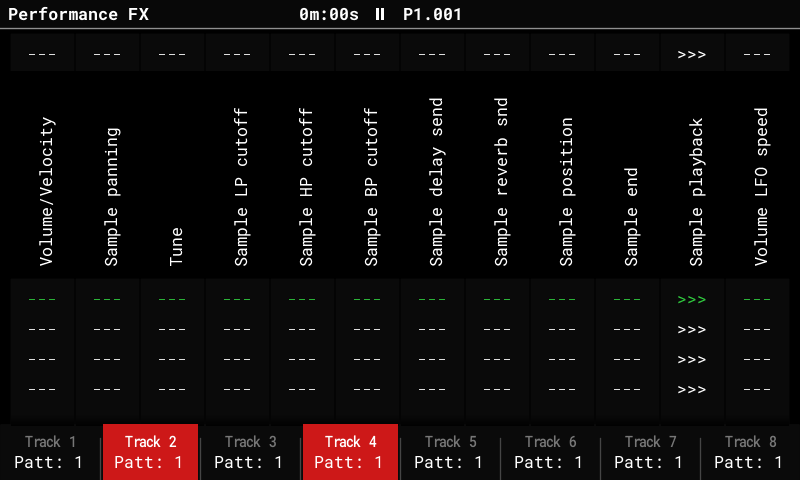
- Performance track keys select, as on the original firmware (user report: "the keys work the wrong way round"; confirmed in Polyend's tracker-ce source): every track starts off, F1..F8 light the tracks the effects play on. OpenTracker's way (every track on, a key turns its track off) is Config > General > Perform track keys: Exclude.
- Pads on an empty FX cell now work as on the original firmware: the last used effect goes in and the pad sets its value (Fx + pad still picks the effect: top right = Roll).
Earlier update (2.2.3-semi.4): Turing Machine generator, fixes from user reports
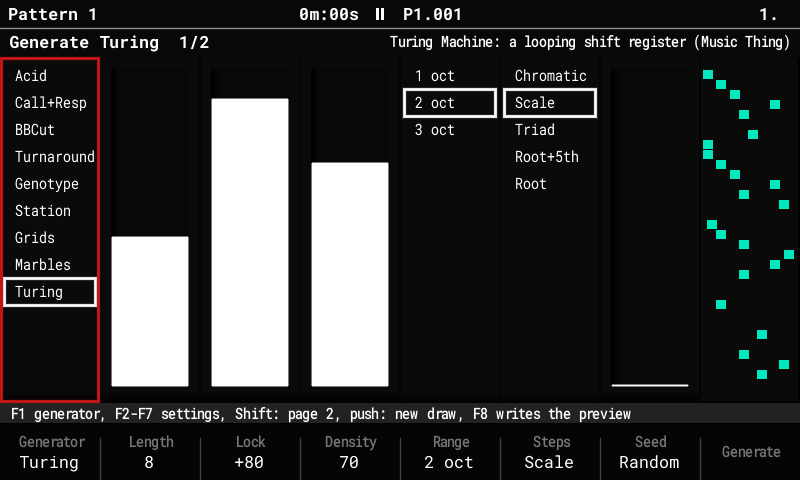
- Generate: Turing (Pattern, page 3, F3): the Music Thing Turing Machine writes the notes. Length 1..16, Lock (+100 a locked loop, 0 random, -100 twice the length inverted), Density, Range, Steps (scale quantizer), Gate, Velocity, Rate, Glide. The written tracks stay live.
- Perform FX Turing Machine / Turing Length (its own columns now, not in Pattern Play Mode): the knob runs the register on from loop to loop on generated tracks; on any other track it plays the track's own steps in Turing order, over Pattern Play Mode. TM8 / TM16 are gone from the Play Mode list (older sets still play them).
- Fix: Paulstretch froze the device (200 / 400 ms windows): the FFT's twiddle table was too short for 8192 / 16384 points, and the work took minutes. Now about 4x less work (two windows per FFT, half-window hop) and the progress popup counts up while it runs.
- Fix: themes listed twice as "._": the hidden files macOS writes on a FAT card are
skipped. Copy the theme
.txtfiles into the card'sThemesfolder (not a subfolder). - Fix: pads on an empty FX cell: in edit mode a pad alone now picks the effect, by the same map as Fx + pad (top right = Roll); it wrote a value with no effect before.
Earlier update (2.2.3-semi.3): MIDI learn, a theme editor on the device, Trigger theme
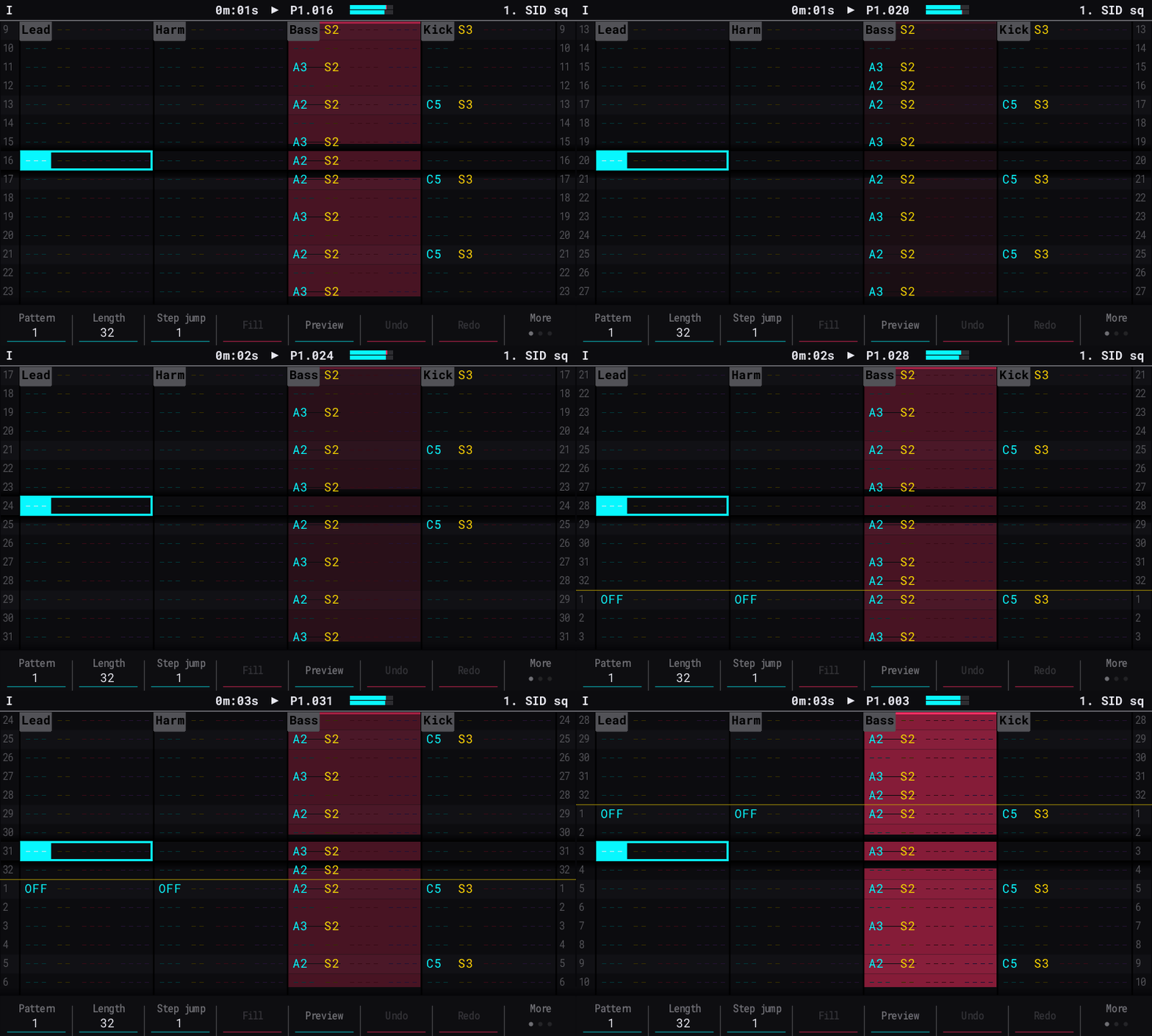
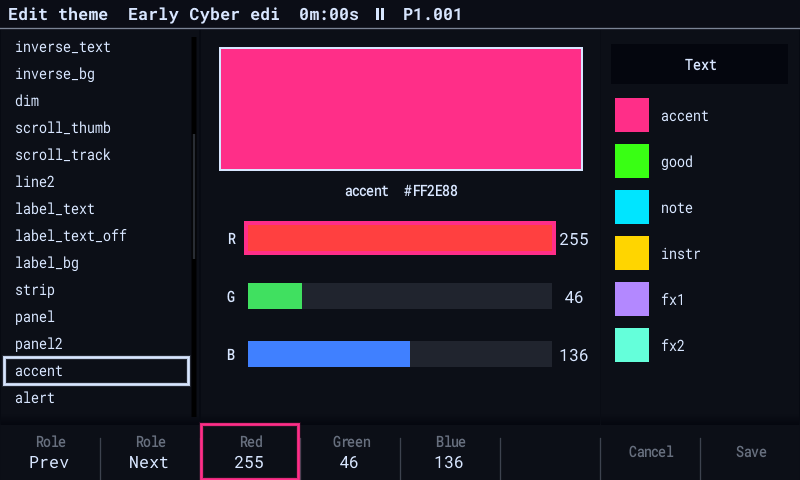
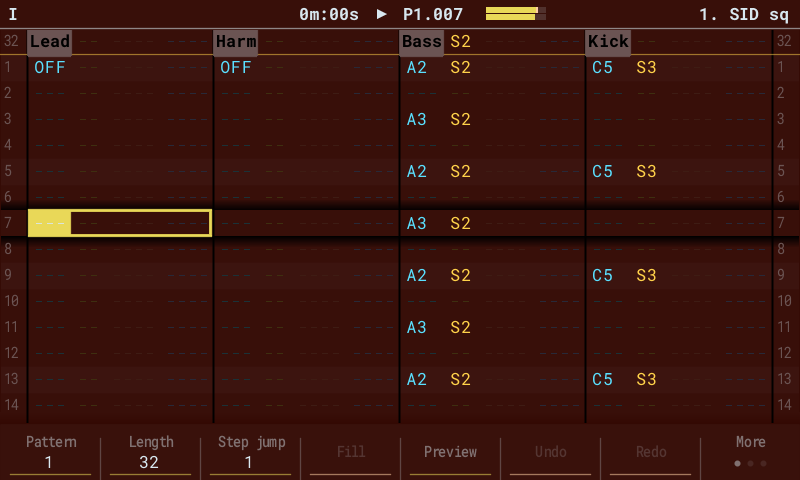
| Trigger: a column lights up when its track plays | Edit theme: every role, R / G / B with the encoder |
|---|---|
 |  |
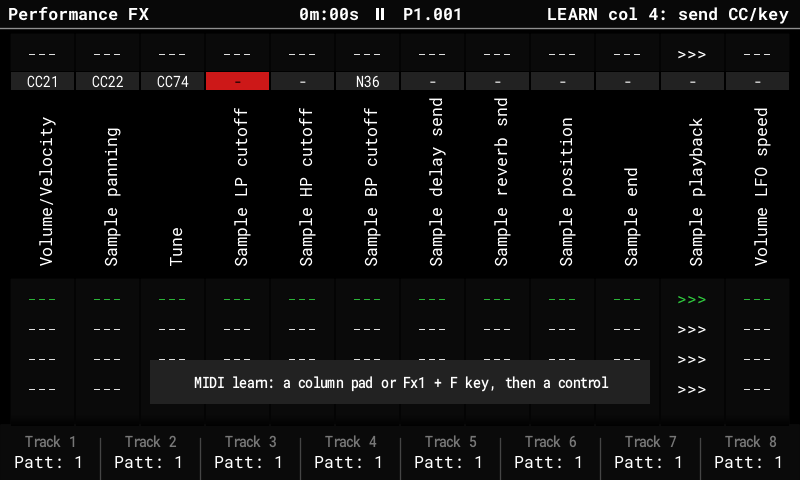
- MIDI learn on the Performance screen: Shift + Fx2 starts learn mode; press a column pad (or Fx1 + F1..F8 for a scene), then move a knob or hit a key on your controller. A learned CC drives that column over its whole range while the Performance screen is open; a learned key or a CC going over 64 recalls the scene. Up to 12 columns and 8 scenes, any channel; the learned control shows under each column (CC21, N36). Delete clears the picked one, Shift + Fx2 ends learn mode. Kept in the config (EEPROM and card). The stock CC 51..62 keep working.
- Config > MIDI > Perform CC out: sends the value of every learned column back out as its CC when it changes (pads, scenes, morphs), so motor faders and LED rings follow. A control coming in is not echoed back.
- Config > General > Edit theme: edits the current theme on the Tracker. F1 / F2 (or Up /
Down) pick one of the 42 roles, F3 / F4 / F5 (or Left / Right) Red, Green, Blue, the encoder
changes it (Shift: steps of 8). The whole screen previews it at once. F8 Save names it and
writes
Themes/<name>.txt(it becomes the display theme), F7 Cancel goes back. - Trigger theme (Config > Display theme, the last built-in one): every time a track starts a note (pattern, play modes, rolls, Track Link, pads, MIDI), its column on the Pattern screen flashes and fades in about 0.15 s.
Earlier update (2.2.3-semi.2): themes that follow the music, a theme pack
| Reactor: the page heats up with the master level | Beat / Pump while playing (animated) |
|---|---|
 | 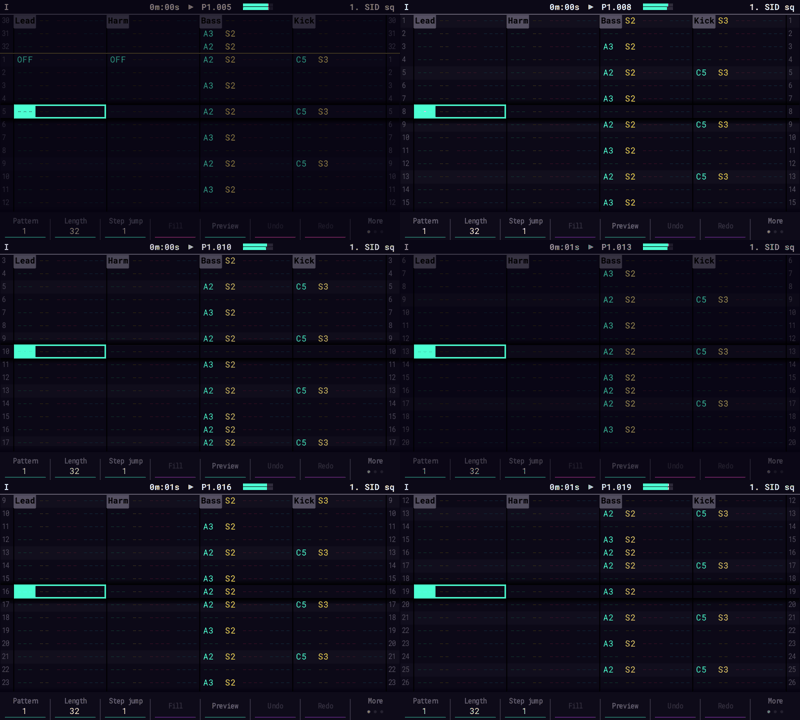 |
- Three music-reactive themes (Config > Display theme): Beat flashes the accent on every beat of the song and the page on the downbeat; Reactor heats the page from deep blue to red-hot with the master level; Pump ducks the whole page with the sidechain (Master 5/5), or with the beat when no sidechain is set. Still while nothing plays.
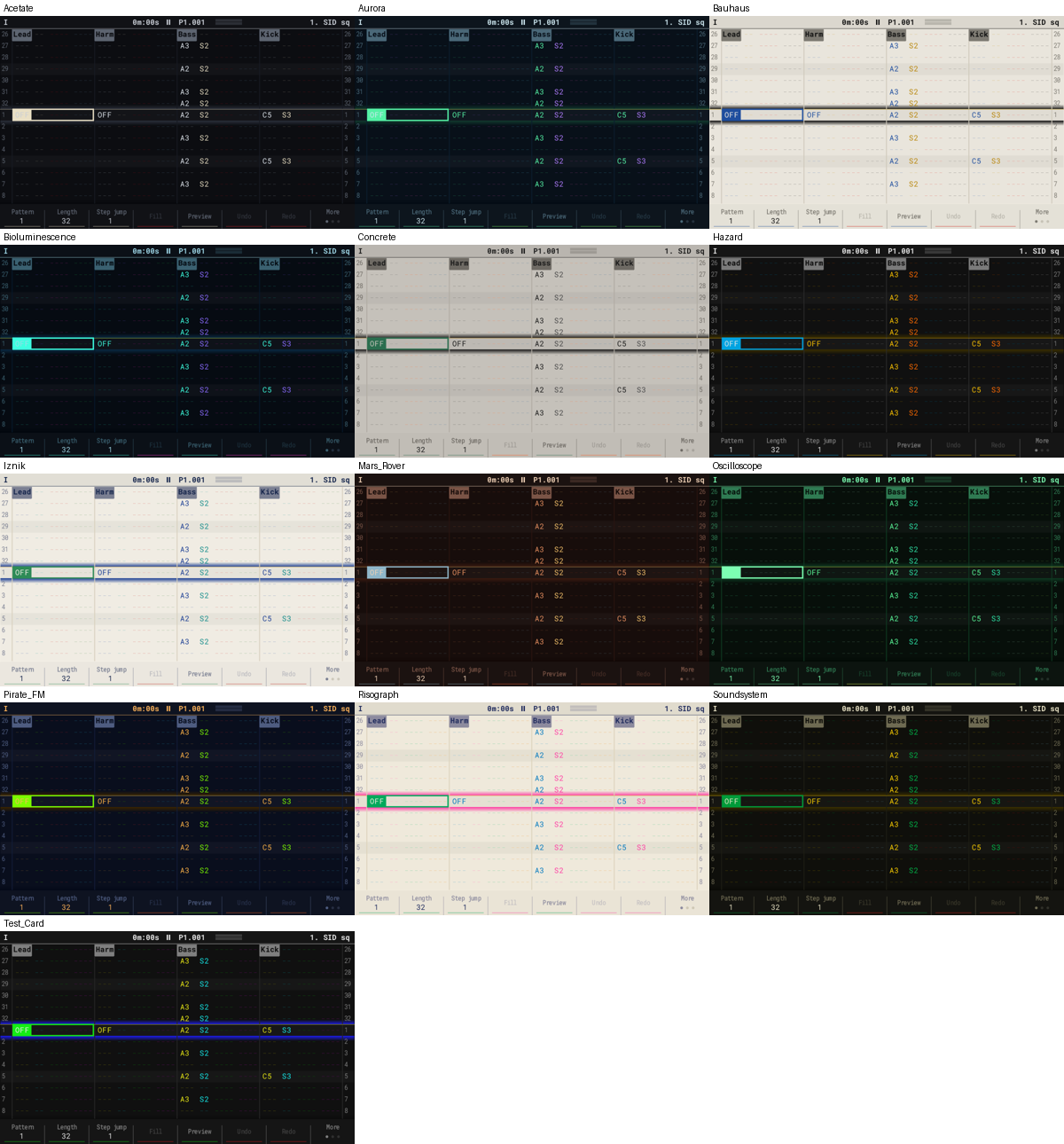
- Theme pack for the card (
themes/, copy the files to the card'sThemesfolder): Iznik, Test Card, Acetate, Pirate FM, Oscilloscope, Risograph, Bauhaus, Bioluminescence, Hazard, Mars Rover, Aurora, Concrete, Soundsystem. Every role is set; light and dark ones. They cost no flash.tools/themes/make_theme_pack.pybuilds them from a few colours each.
Earlier update (2.2.3-semi.1): on top of OpenTracker 2.2.3
Everything of the semi fork, now on the upstream 2.2.3 code (2.2.3-beta2, 51 upstream changes):
- From upstream 2.2.3: SD streaming (long samples play from the card, Config > Stream from
card; a sample too big for the memory is imported onto the card and streamed), stereo synths (Width) for every engine, theme files on the card
(
/Themes/*.txt, Config > Export theme) and the Halloween theme file, exports at 44.1 kHz, MIDI pitch bend on live notes, eight synthwave PERC kits, Sample Editor effects up to 60x faster, the stack guard, the CPU meter levels and many fixes (SD card, Sample Loader, display, MIDI clock on DIN). - Display theme lists the stock three, the 26 fork palettes, then the card's theme files; Export theme writes a fork palette as a file too, to edit on a computer.
- Config keeps both sides in one record (upstream's fields first, the fork's after them); a config saved by an earlier semi image loads with all its settings, Perform scenes too.
- Memory: the play-mode step tables moved to the SDRAM and the Acid step data got smaller, so the stack keeps the headroom 2.2.3 needs for SD streaming (77 KiB, gate 75 KiB). The image is about 840 KB (fork gate 860 KB, hard limit 877 KB).
Earlier update (2.2.1-semi.6)
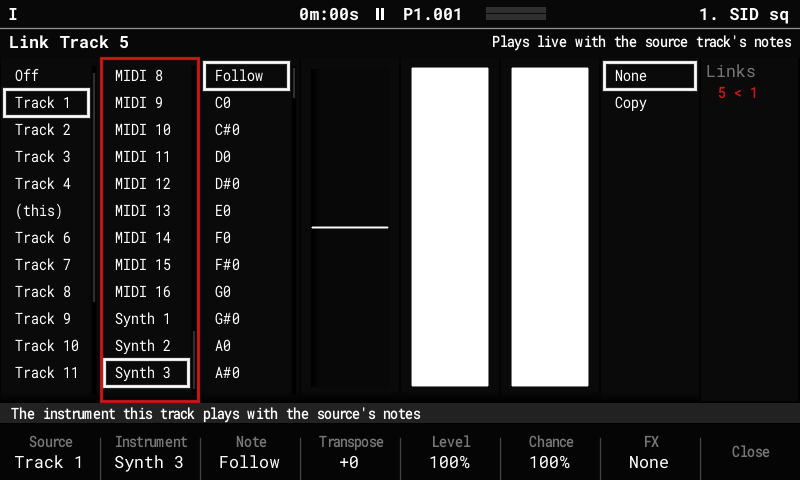
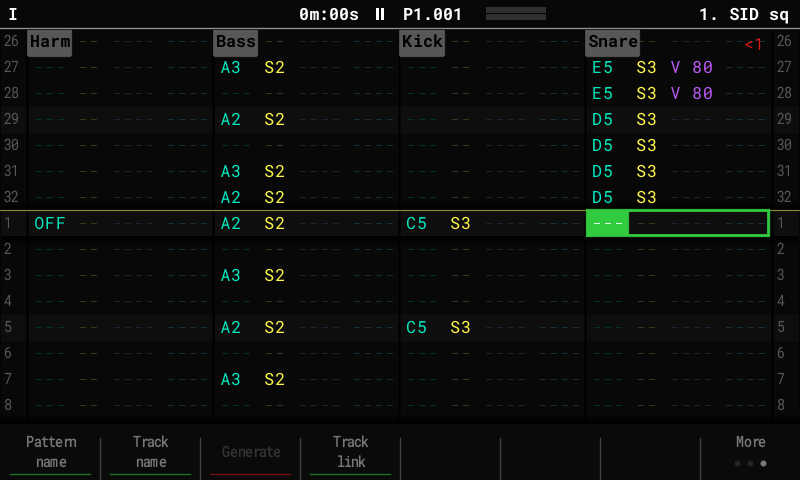
| Track Link: a track plays live with another track's notes | Linked track: "<1" on its header |
|---|---|
 |  |
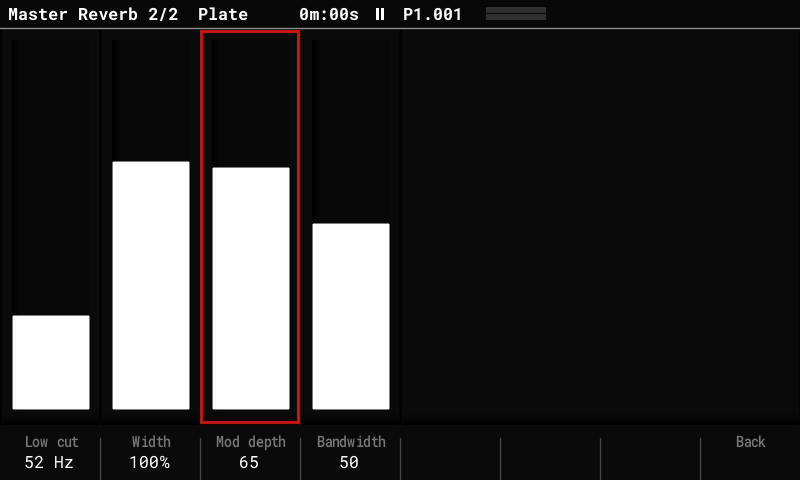
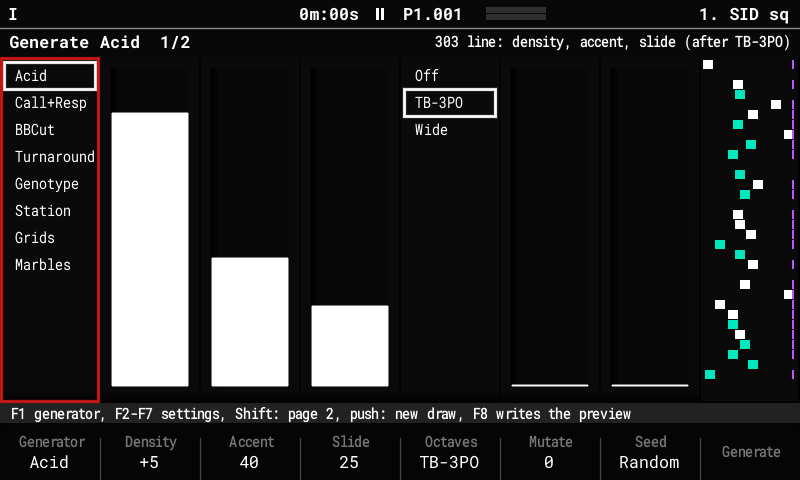
| Master Reverb 2/2 (Shift): Low cut, Width, character | Acid: TB-3PO density, Octaves |
 |  |
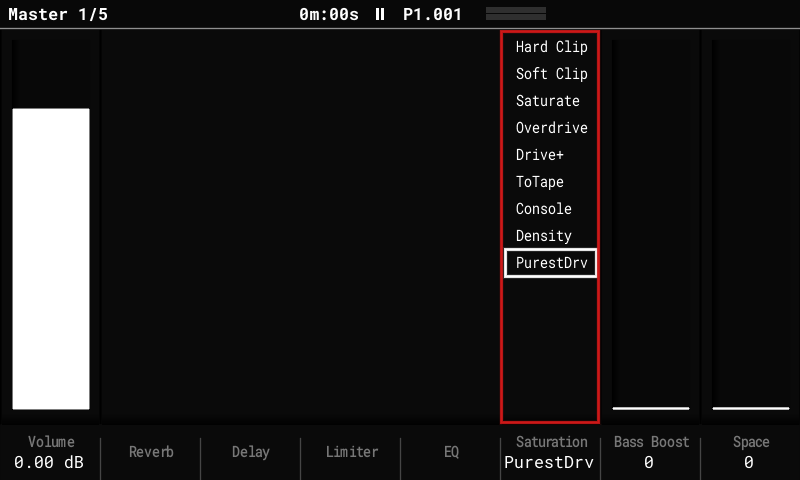
| Master 1/5: the colours in the Saturation list | |
 |
- Track Link (Pattern page 3, F4): a track follows another track live. Whenever the source plays a note (steps, rolls, play modes, Mutate, live Grids, pads), the linked track plays its own instrument at the same moment: Follow or fixed note, transpose, level, chance, FX copy. Mute the source and only the layer is heard. Saved with the project.
- Acid density as in TB-3PO: 0 is the sparsest, -7 and +7 play every step; below 0 the line narrows to the root (-7 root only) and repeats, above 0 it uses the whole scale. Octaves Off / TB-3PO / Wide. The Perform FX Acid Density reaches every density.
- Turing Machine: Loop Lock is now per track and works as the TM knob: +100 locks the loop, -50 random, -100 a locked double-length loop.
- Master Reverb 2/2 (Shift): Low cut and Width for every model, two character values per model (Hall mod, Shimmer amount, Gated hold / release, Texture grain / octaves, Plate mod / bandwidth, Room early reflections).
- Master colour fix: ToTape / Console / Density / PurestDrive now replace the stock saturation instead of running after Drive+; they are in the Master 1/5 list too.
Earlier update (2.2.1-semi.5)
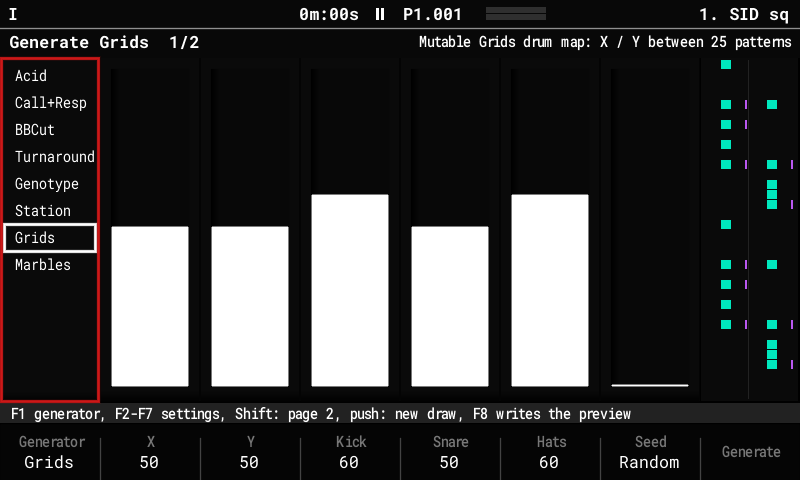
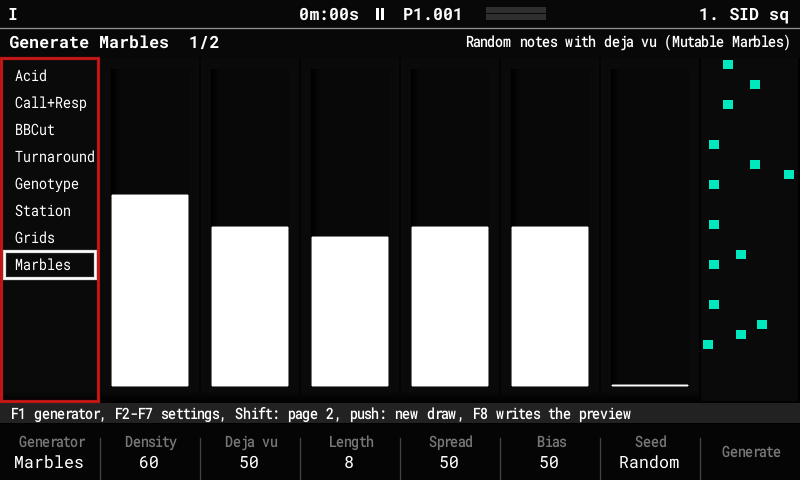
| Generate: Grids (Mutable drum map, live) | Generate: Marbles (deja vu) |
|---|---|
 |  |
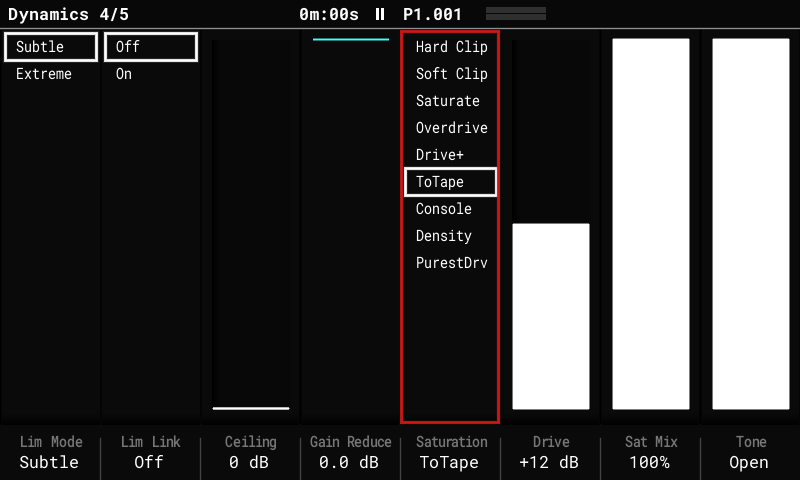
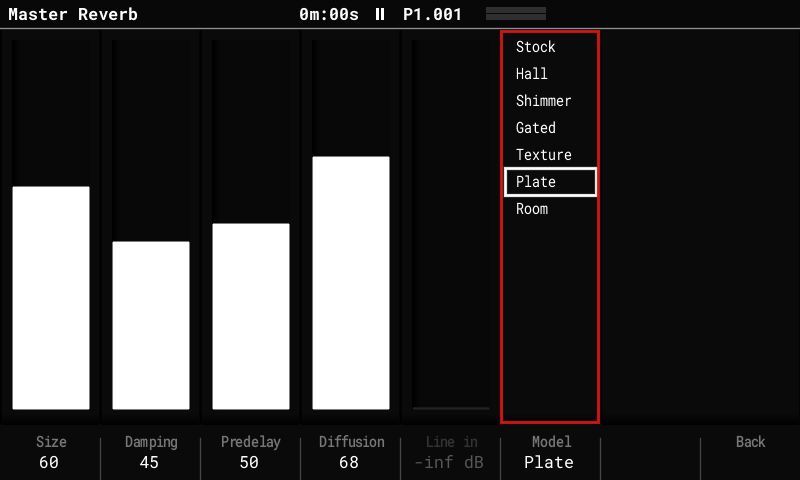
| Master 4/5: colour (ToTape, Console, Density, PurestDrive) | Master Reverb: Texture, Plate, Room |
 |  |
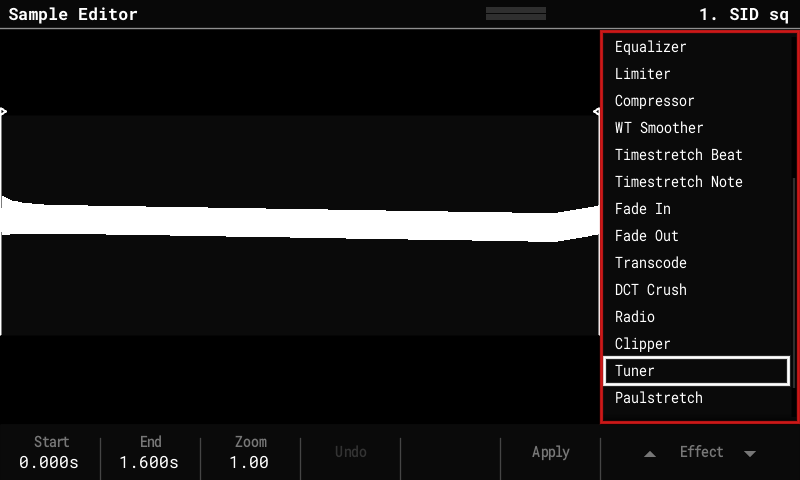
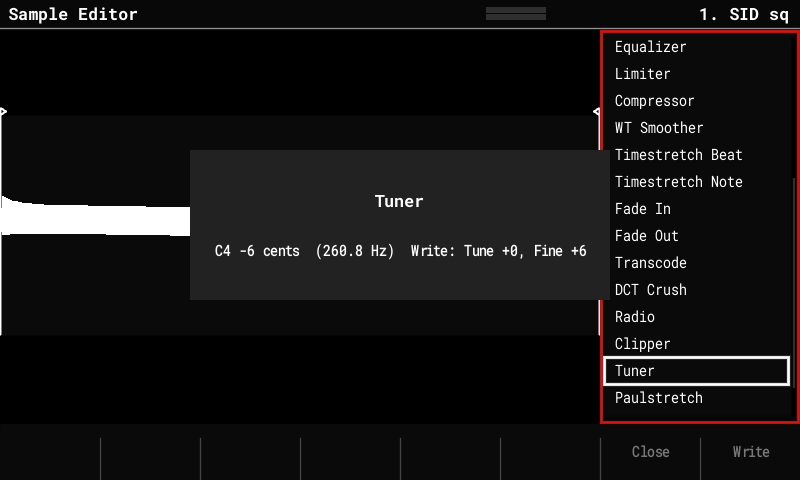
| Sample Editor: Tuner, Paulstretch, Granular, Strand | Tuner: note, cents, Write sets Tune / Finetune |
 |  |
- Generate: Grids (Mutable Instruments Grids' drum map, GPL-3.0): kick, snare and hats from an X / Y point between 25 patterns, with densities, Chaos, Accent, 1/16 or 1/32 and a kit on three tracks. The kit stays live: Perform Grids X / Y / Density redraw it as it plays.
- Generate: Marbles: random notes with deja vu: a T generator (Coin, Clusters, Drums, two tracks) and an X generator (Spread, Bias, Steps from chromatic to root only, Range).
- Genotype Drummer (after Noise86's MarkovDrummer): a Markov chain over all the selected drum tracks together, so the parts keep their relation.
- Play modes M1..M3 (Marbles deja vu), TM8 / TM16 (Turing Machine) and R1 / R2 (randLoops after SickoCV: the notes drift by scale degrees); the Perform FX Loop Lock locks or loosens them all.
- Perform DeRez: sample-rate reduction on the tracks' samples (after Airwindows DeRez).
- Master Reverb models Texture (granular cloud after Clouds / Beads), Plate (Dattorro's plate, the network of Valley's Plateau) and Room (after Dragonfly Room).
- Master colour (after Airwindows): ToTape, Console, Density, PurestDrive, in the Master 4/5 Saturation list or Config > Master colour.
- Sample Editor: Tuner (YIN pitch detection, writes Tune / Finetune), Paulstretch, Granular (after Argotlunar) and Strand (after Leviathan's Strand).
- LFO shapes Rungler, Gingerbread, Rossler, Drift (Ornstein-Uhlenbeck) and Bridge (Brownian bridge); a stock firmware plays them as Random.
- PLT synth model (Synth 1-3): 2-Op FM and Harmonic in the manner of Plaits.
Earlier update (2.2.1-semi.4)
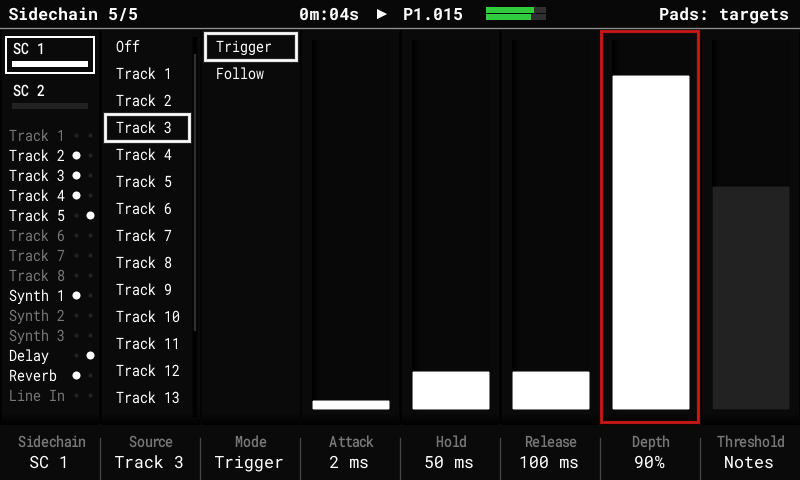
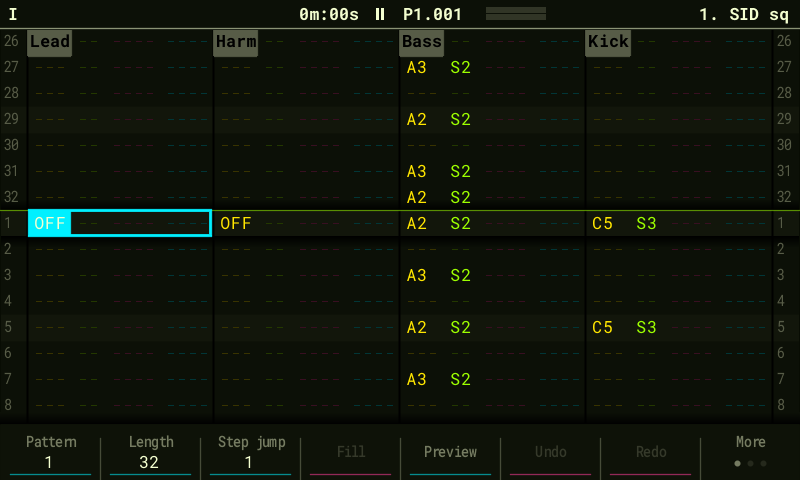
| Master 5/5: Sidechain (two sources, targets on the pads) | Theme: Acid House (animated) |
|---|---|
 |  |
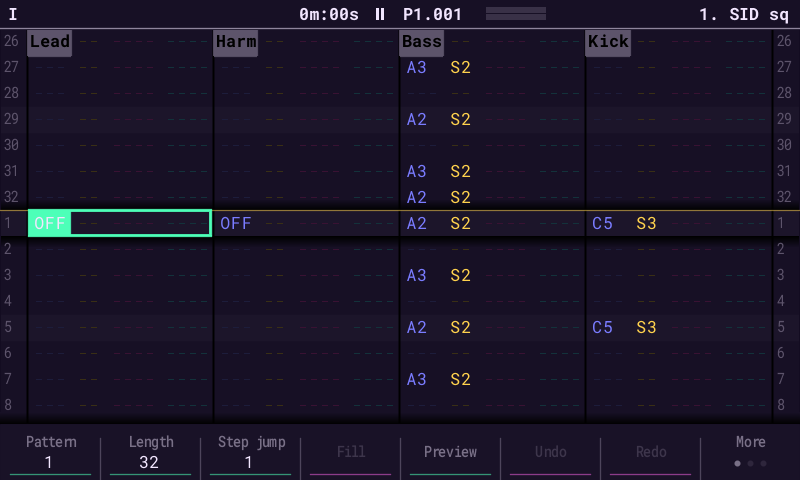
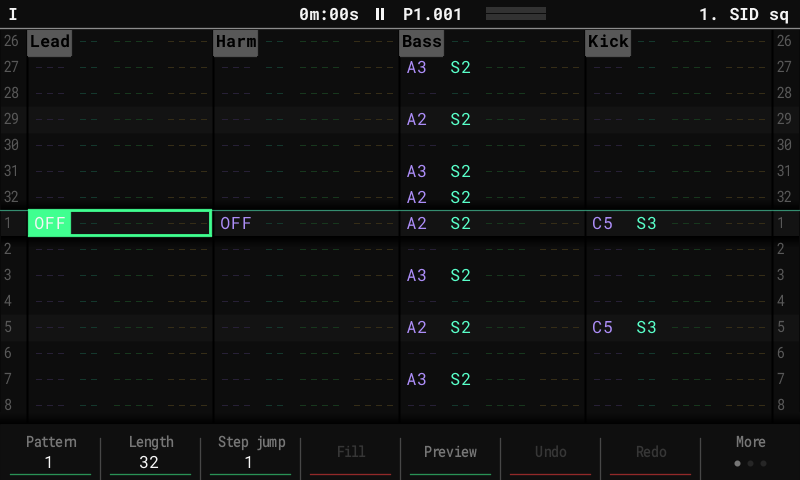
| Theme: Plasma (animated) | Theme: Colour Wheel (animated) |
 |  |
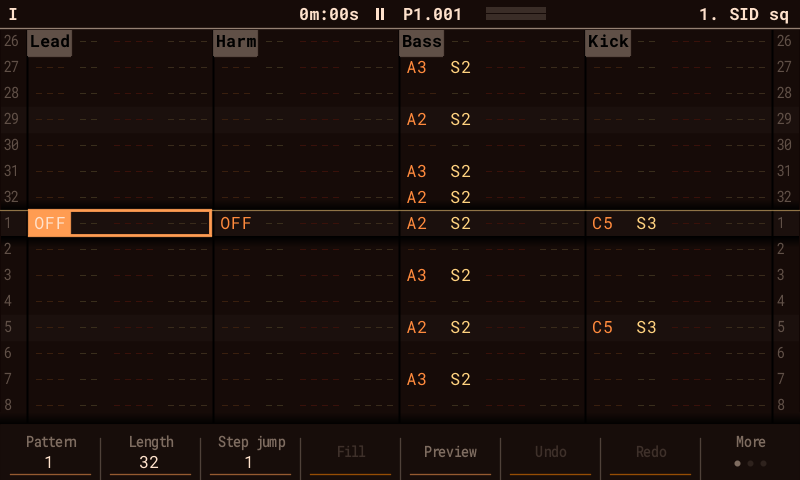
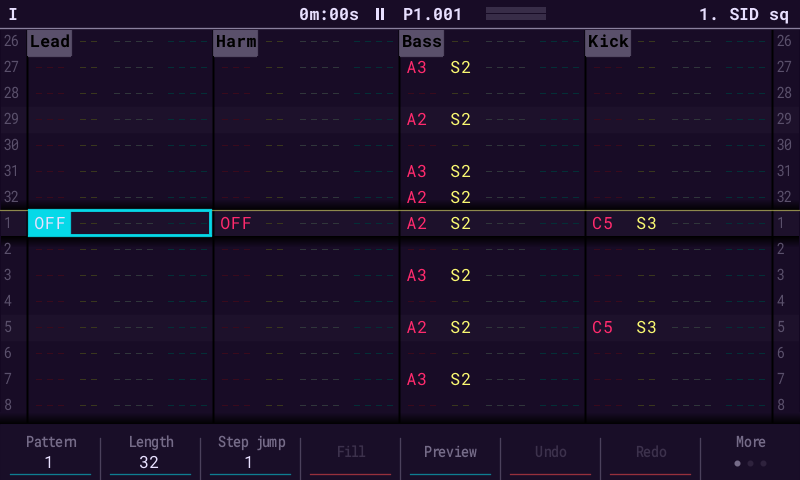
| Theme: Ember (animated) | Theme: Night Drive (animated) |
 |  |
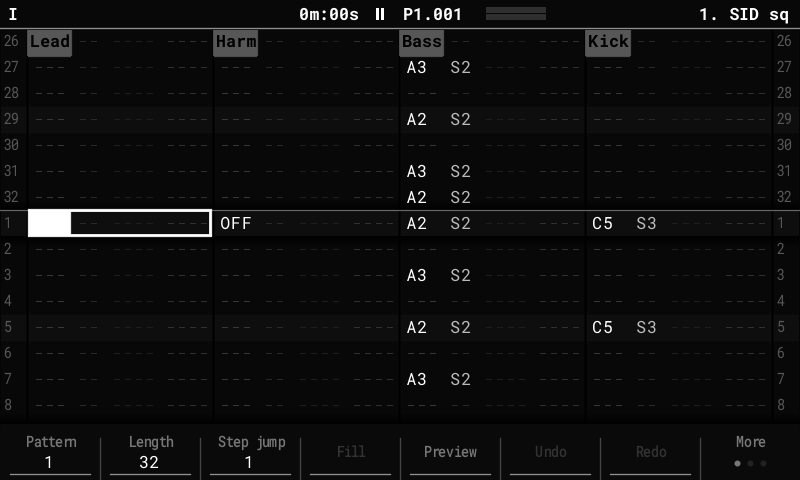
| Theme: Glitch (animated) | |
 |
- Master 5/5 Sidechain: two sidechains (SC 1 / SC 2), each with its own source (track 1..16
or line in L / R), mode (Trigger on notes, Follow on audio with a threshold),
attack / hold / release / depth, and its own targets: tracks 1..8, synth slots 1..3,
delay and reverb returns, line in. The pads toggle the targets, Shift + pad picks the source
track; nothing is ducked unless it is a target. Saved with the project (
otfork.bin). - BBCut Mutate / random seeds: every re-cut takes a fresh seed, the Perform BBCut A / B offsets steer the next cuts, the first play after boot re-cuts, and the Generate popup's random draws differ after every boot.
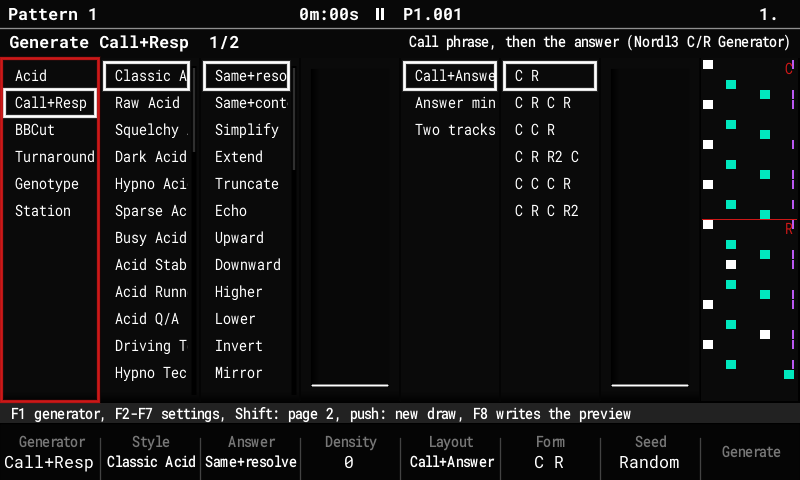
- Call+Resp: the form repeats over the whole selection (odd lengths too, 3 x 10 steps say), repeats swap the two answers, Auto picks 32 / 16 / 8 / 4 / 2 steps per part, and the default answer is "Q + closure".
- Six new animated themes: Acid House, Plasma, Colour Wheel, Ember, Night Drive, Glitch (29 themes in all).
Earlier update (2.2.1-semi.3)
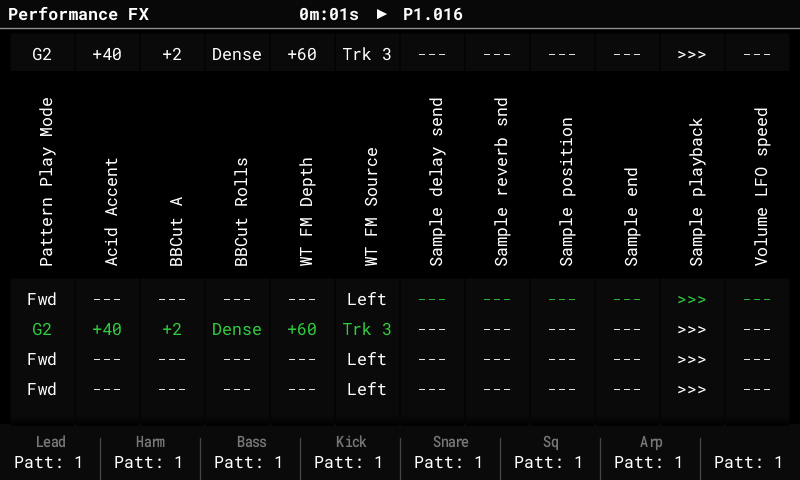
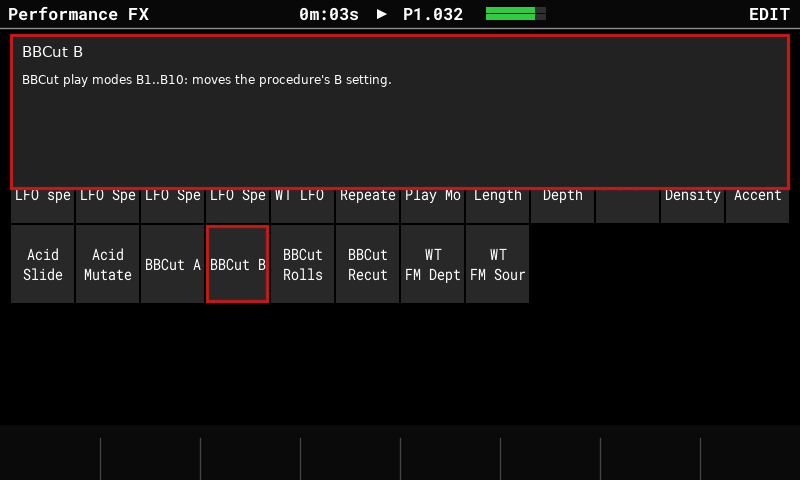
| Perform: generator controls, Genotype G2, wavetable FM | Perform: FX chooser (Shift + encoder) with help |
|---|---|
 |  |
| Perform: scenes (Fx1 recalls, Fx2 stores) | Master 4/4: Dynamics |
 |  |
| Master Reverb: Hall / Shimmer / Gated models | Shift lock tag and title level meter |
 |  |
| Config: Scale lock, Screen saver, Level meter, effect models | |
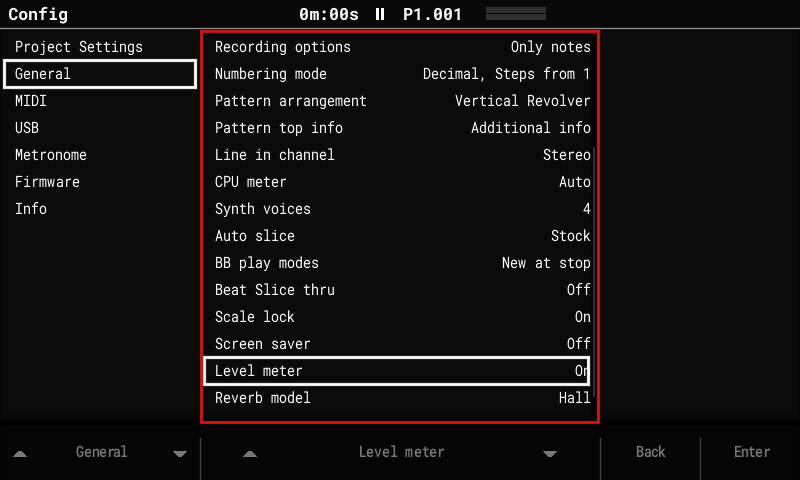 |
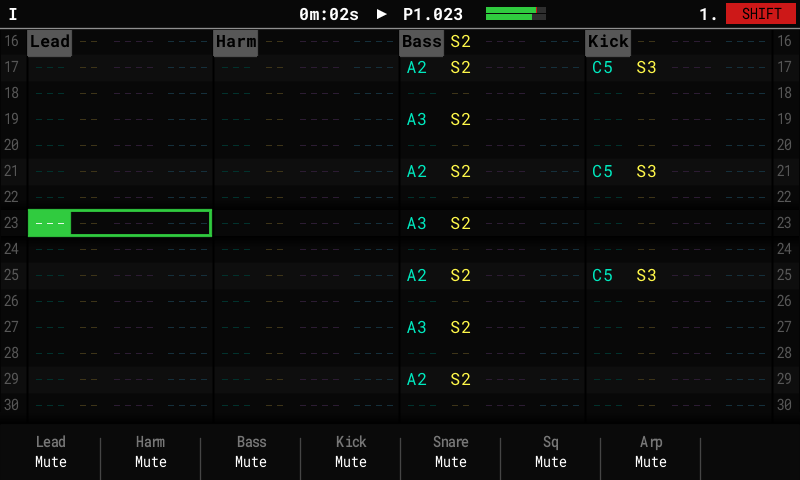
- Shift lock: tap Shift twice; a SHIFT tag shows until the next Shift press.
- Scale lock: the encoder moves notes through the project scale.
- Pattern dashes: drawn pixel-exact, every row shows its column colours on the device.
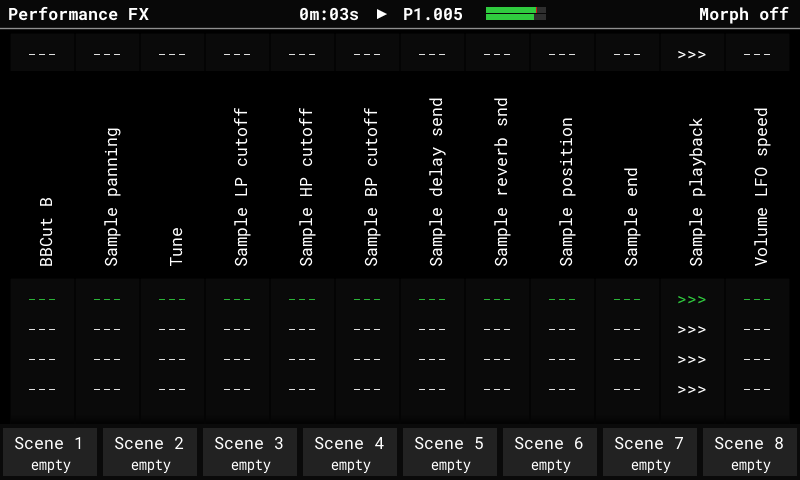
- Perform: generator controls (Acid Accent / Slide / Mutate, BBCut A / B / Rolls / Recut), Genotype play modes G1..G3, wavetable FM between tracks (WT FM Depth / Source), an FX chooser with help (Shift + encoder in edit mode), scenes with morph (Fx1 / Fx2 + F1..F8) and Perform recording into FX 2 (Insert).
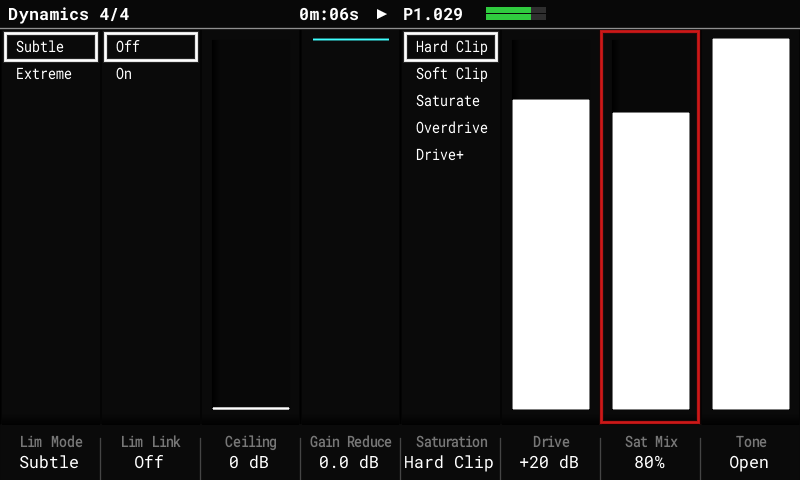
- Master 4/4 Dynamics: limiter mode, stereo link, ceiling; saturation drive, mix, tone.
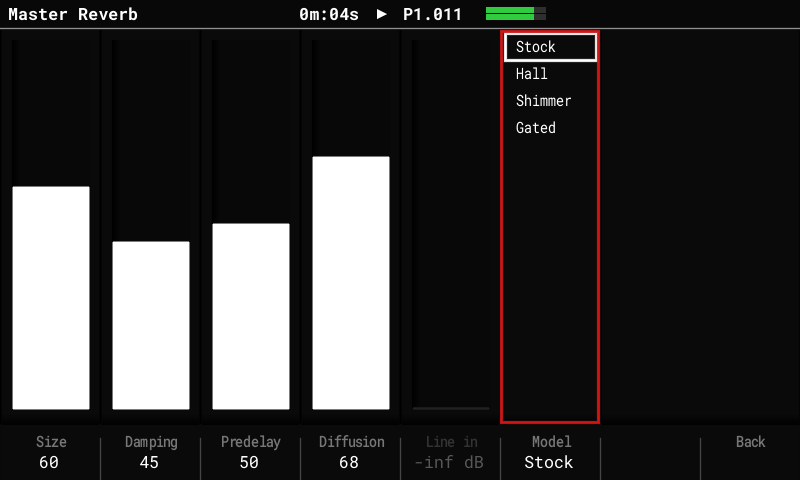
- Reverb models Hall, Shimmer, Gated and delay models Tape, Lo-fi.
- Screen saver (the Data screen) and a title level meter.
Screenshots (2.2.1-semi, simulator)
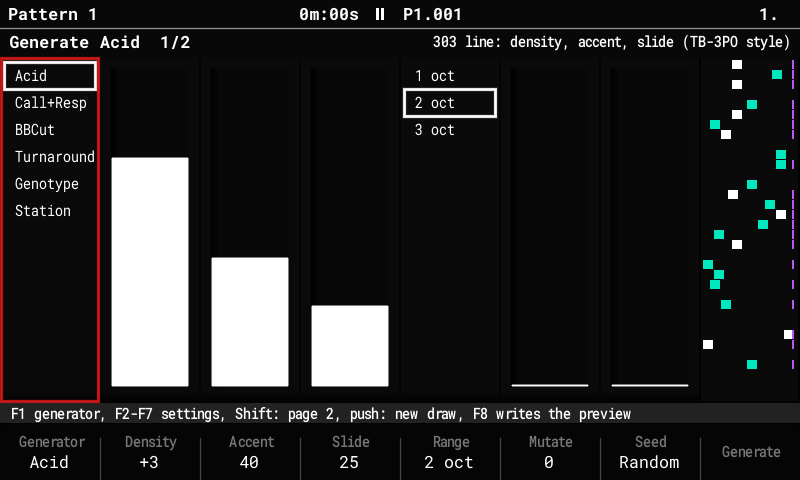
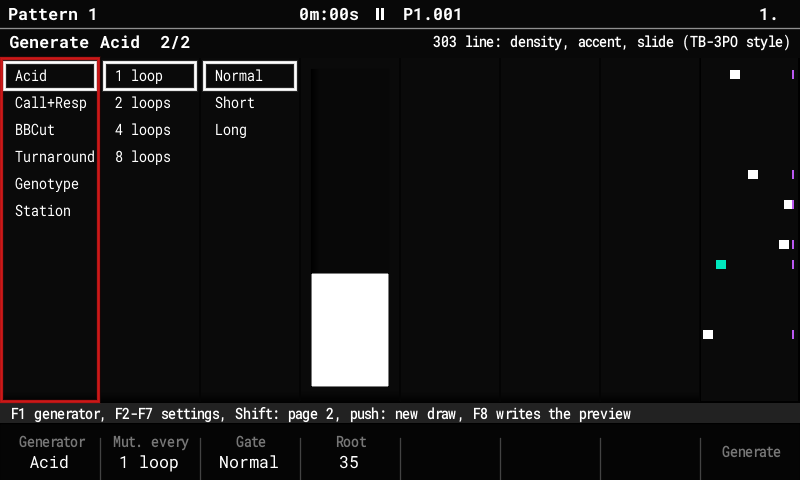
| Generate: Acid, live preview on the right | Generate: Acid, page 2 (Shift) |
|---|---|
 |  |
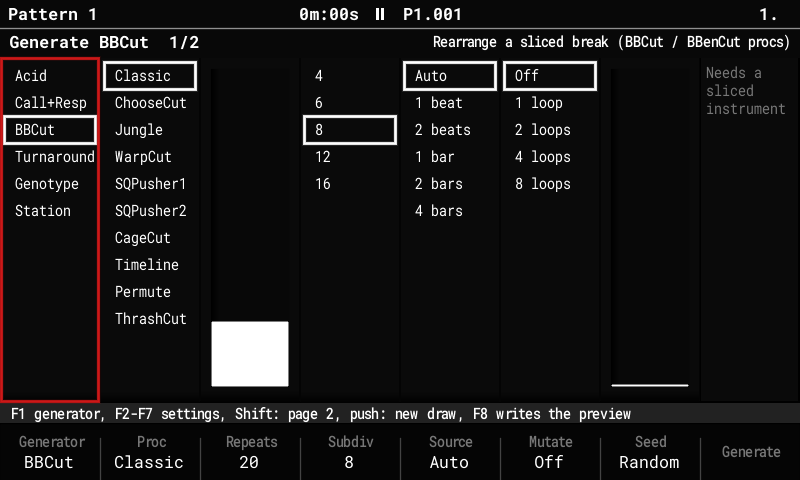
| Generate: Call+Resp (Form, C / R tags) | Generate: BBCut (Jungle, Mutate) |
 |  |
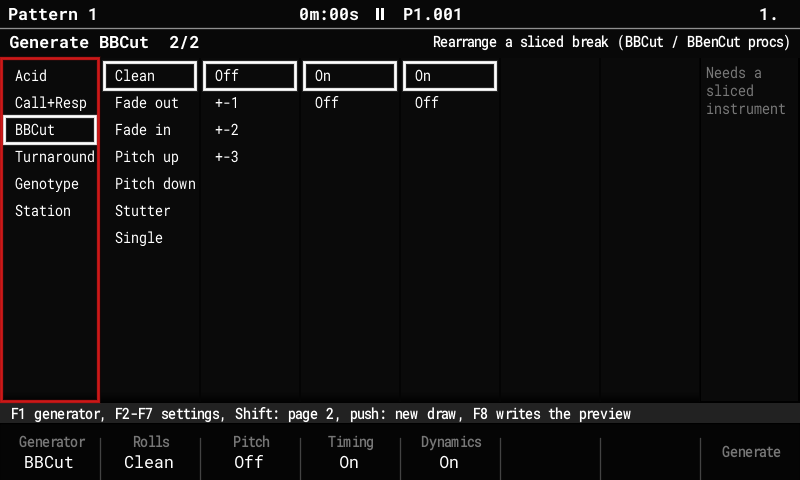
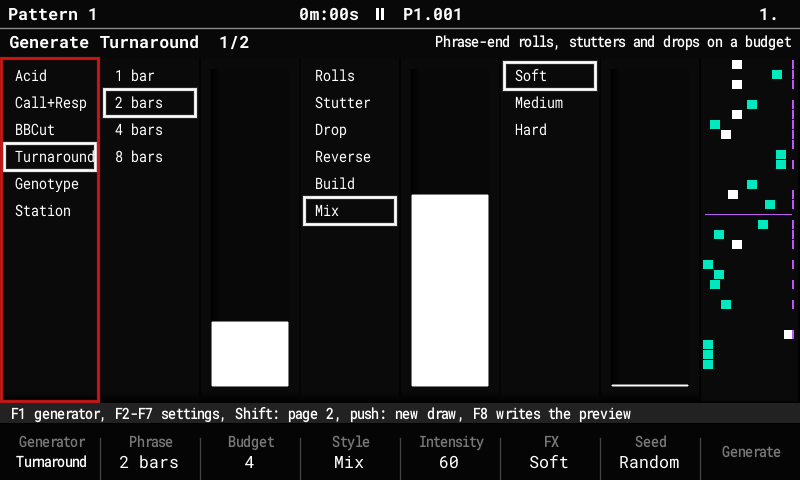
| Generate: BBCut page 2 (Rolls, Pitch, Timing, Dynamics) | Generate: Turnaround (FX Soft / Medium / Hard) |
 |  |
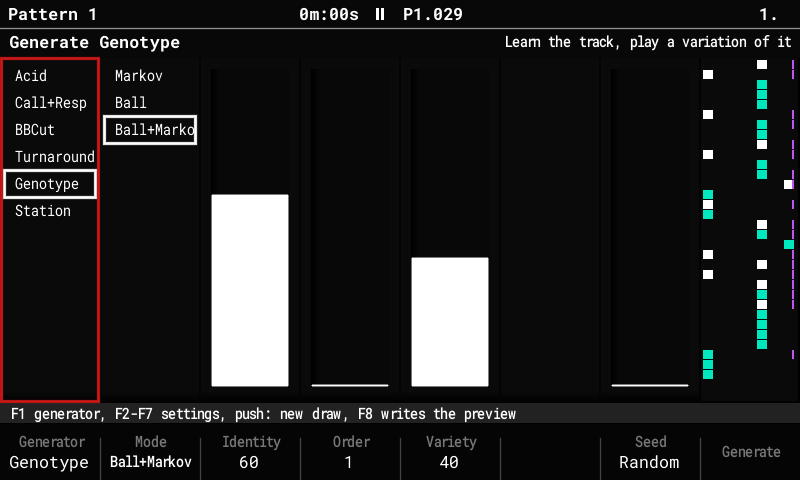
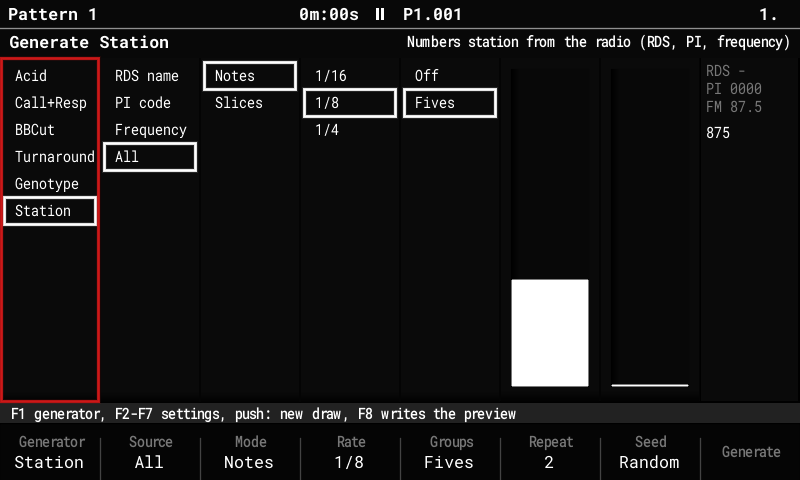
| Generate: Genotype | Generate: Station (what the radio gives) |
 |  |
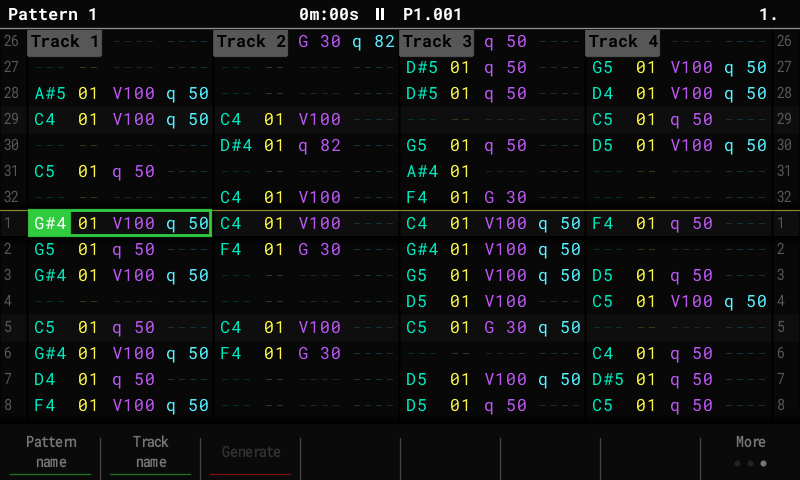
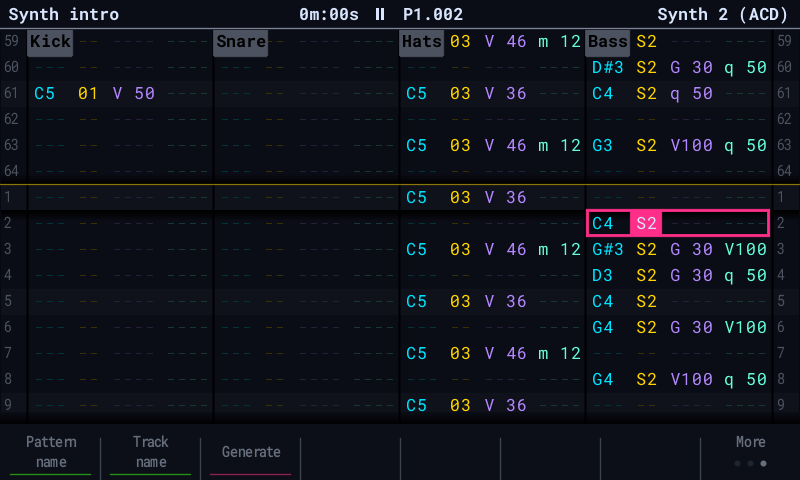
| Six generated tracks | Acid line on the ACD synth (Glide, accents) |
 |  |
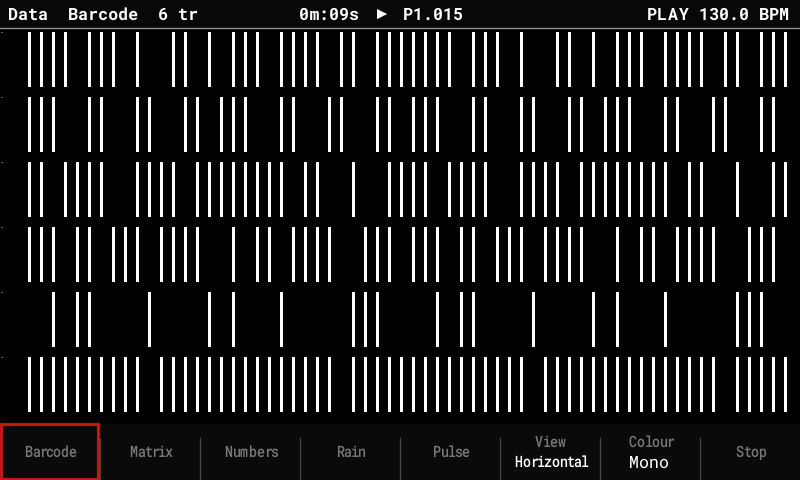
| Data screen: Barcode | Data screen: Matrix, Tracks colour |
 |  |
| Data screen: vertical view | Data screen: Rain |
 |  |
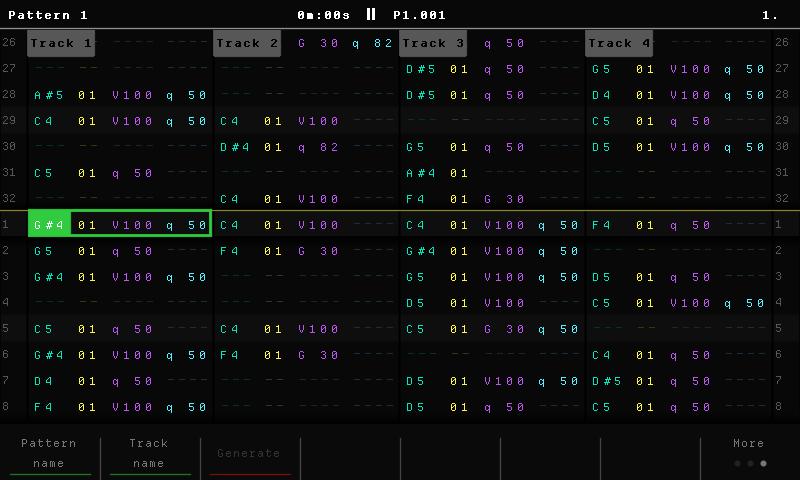
| Data screen: Pulse | Display font: Pixel (Departure Mono) |
 |  |
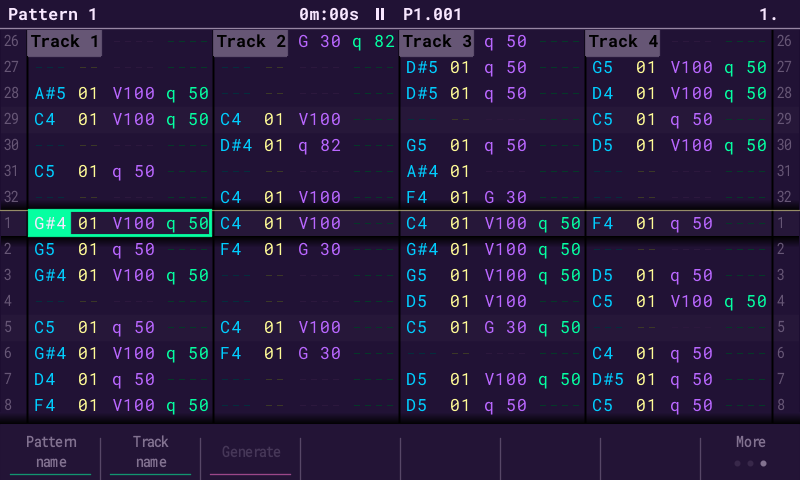
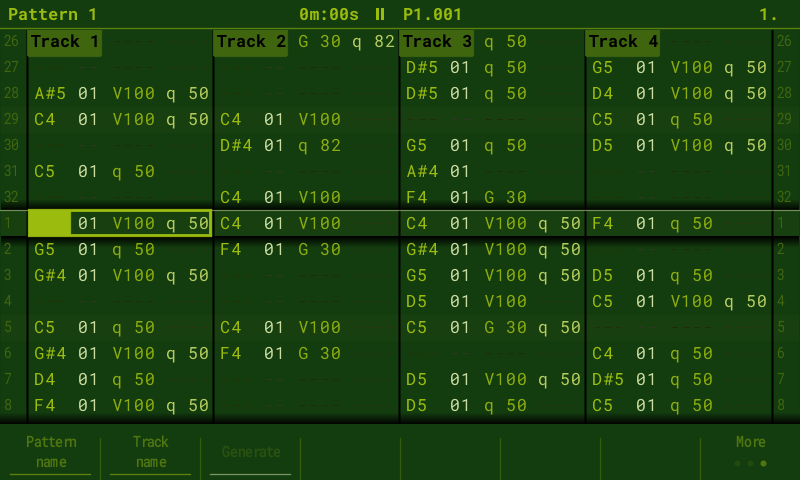
| Theme: Vaporwave | Theme: Game Boy |
 |  |
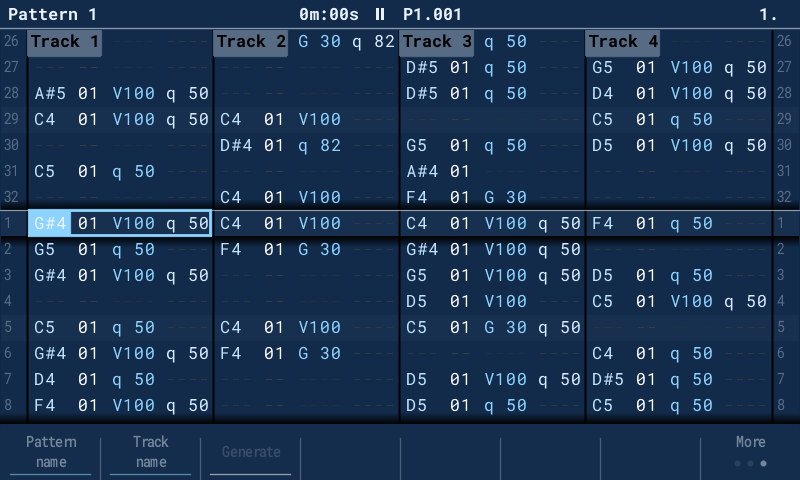
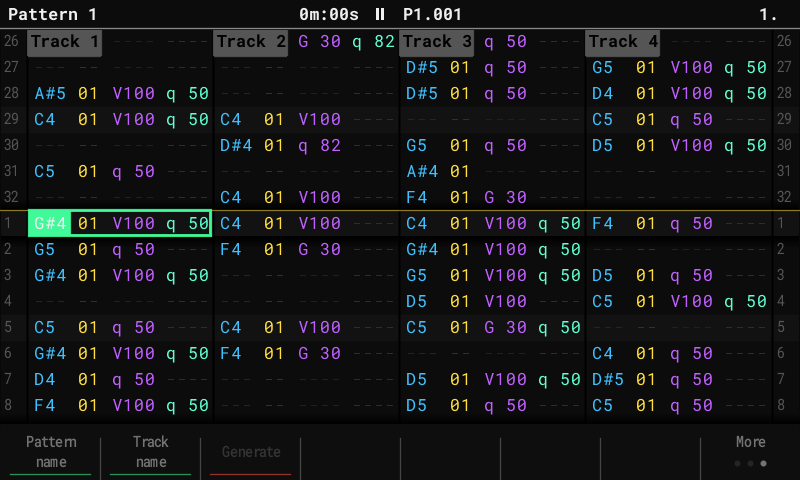
| Theme: Blueprint | Theme: Spectrum (animated) |
 |  |
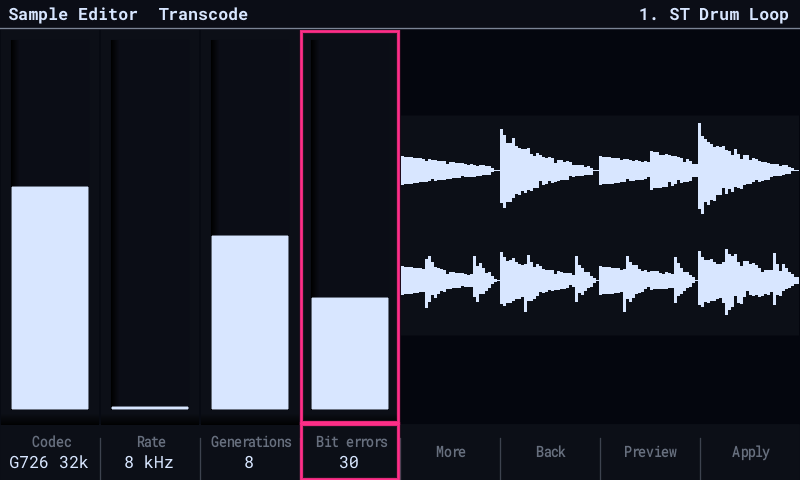
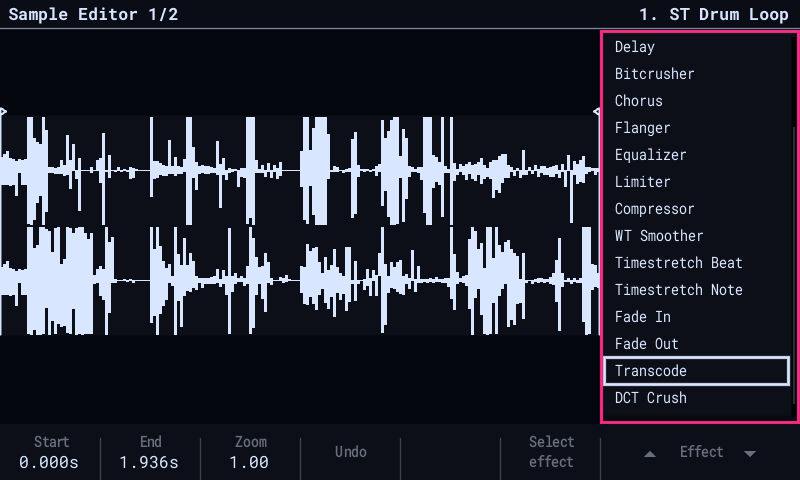
| Sample Editor: Transcode | Transcode applied (G.726, 8 generations, bit errors) |
 |  |
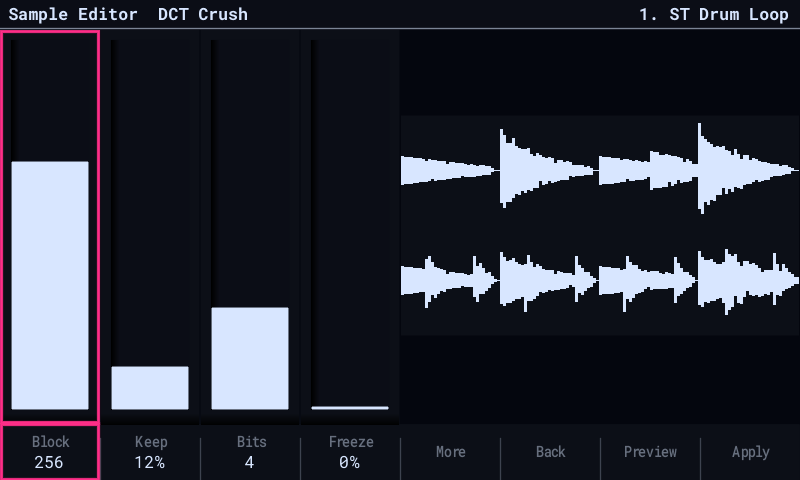
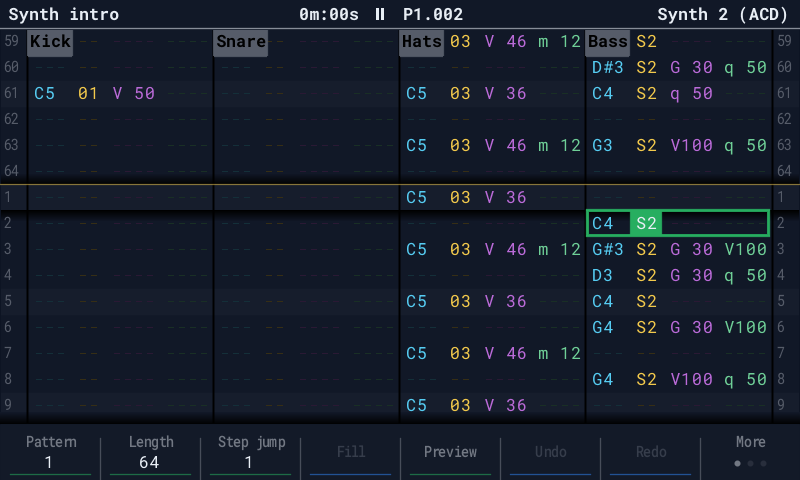
| Sample Editor: DCT Crush | Theme: Corporate |
 |  |
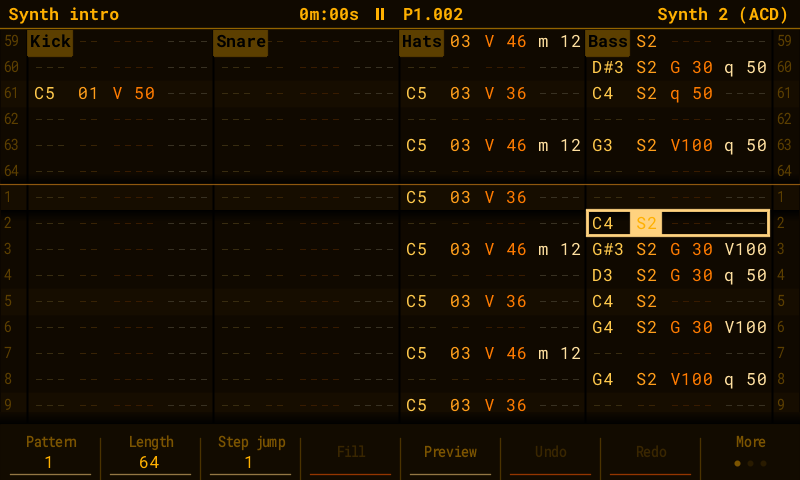
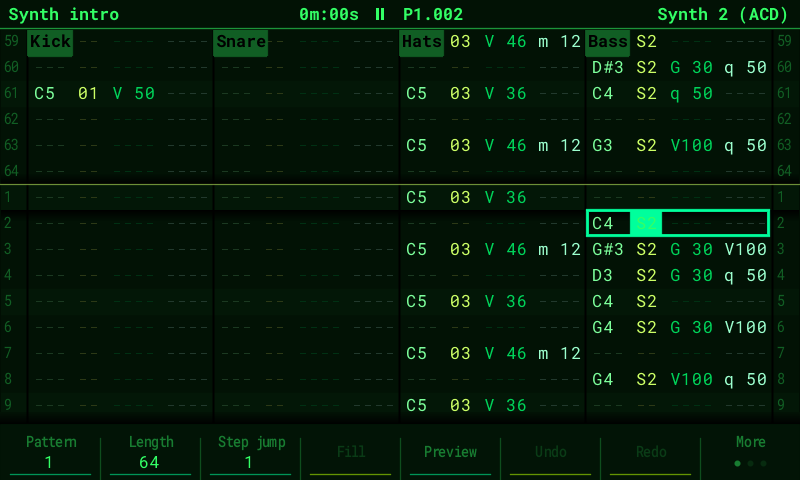
| Theme: Amber CRT | Theme: Green Phosphor |
 |  |
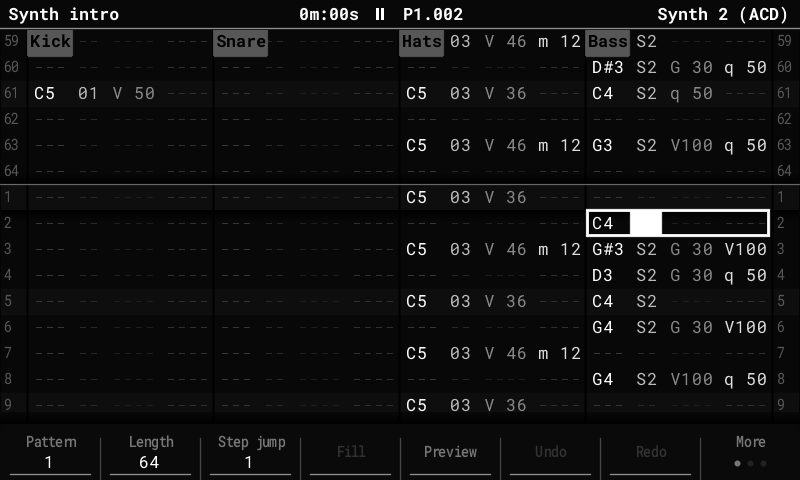
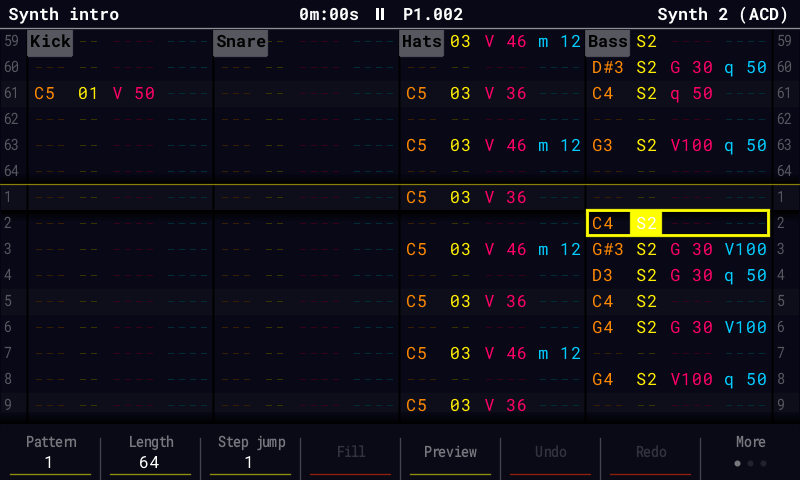
| Theme: Datamatic | Theme: Thermal |
 |  |
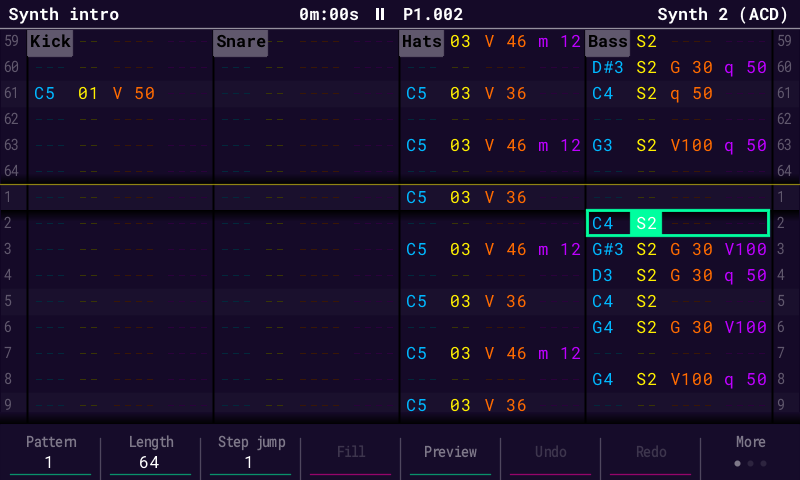
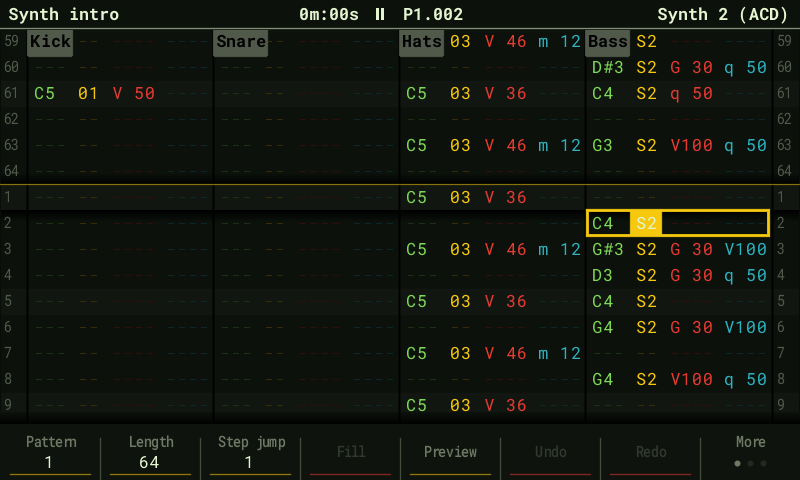
| Theme: Rave Flyer | Theme: Jungle |
 |  |
Generate (Pattern, page 3, F3, edit mode on)
A Fill-style popup: F1 picks the generator, F2..F7 its parameters, Shift the second page, F8 writes the result into the selection (or the cursor track). The right column is a live preview of exactly what F8 writes; the encoder push draws a new random result, and a strip explains the selected parameter. One undo step per Generate; Seed 0 is random.
- Acid: a 303 line in the TB-3PO manner. Density -7..+7 adds or removes notes in a fixed order, so the melody stays; accent, slide, range, root, gate. The line stays live: the Perform FX Acid Density moves its density, Mutate re-rolls it every 1 / 2 / 4 / 8 loops.
- Call+Resp: call and answer after Nordl3's generator (46 styles, 38 answers) with a Form (C R, C R C R, C C R, ...), steps per part, ending, answer octave and motif length. Two tracks puts the call on one track and the answer on the next, taking turns.
- BBCut: Nick Collins' procedures on a sliced break: Classic, ChooseCut, Jungle, WarpCut, SQPusher1/2, CageCut, Timeline, Permute, ThrashCut. Rolls end cleanly where they stop; roll style, per-hit pitch (±1..3), timing and dynamics are selectable, and Mutate gives new cuts every N loops while it plays.
- Turnaround: phrase-end rolls, stutters, drops, reverse and builds on a budget, with an FX strength (Soft / Medium / Hard) and tidy timing.
- Genotype: learns the selected steps and plays a variation made only of them.
- Station: a numbers-station line read from the radio (RDS name, PI, frequency); the preview shows what it read and the digits.
- Grids: the Mutable Instruments Grids drum map (X / Y, densities, Chaos, Accent, kit on three tracks), live under the Perform FX Grids X / Y / Density.
- Marbles: random notes with deja vu (T and X generators, Steps, Range, two-track mode).
- Genotype mode Drummer: a Markov chain over all the selected drum tracks together.
- Track Link (F4 on the same page): the cursor track plays live with another track's notes, its own instrument (note, transpose, level, chance, FX copy).
Live (Performance)
- Play modes B1..B10 (BBCut), T1..T4 (TILT: Bounce, Flipper, Gravity, Multiball) and G1..G3 (Genotype: the track's own steps in a new order every loop), M1..M3 (Marbles deja vu), TM8 / TM16 (Turing Machine) and R1 / R2 (randLoops) in "Pattern Play Mode"; Loop Lock locks or loosens M, TM and R.
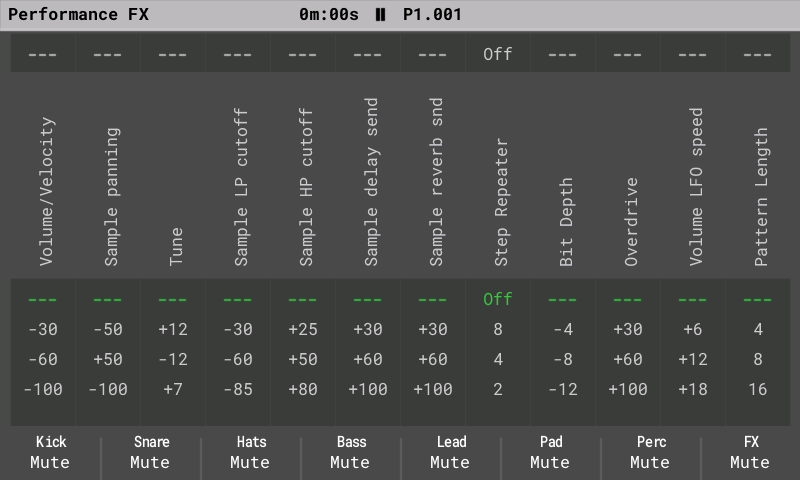
- Generator controls as Perform FX: Acid Density / Accent / Slide / Mutate on the live Acid tracks, BBCut A / B / Rolls / Recut on the B modes, and WT FM Depth / Source: wavetable tracks frequency-modulated by another track, sample by sample. Grids X / Y / Density on live Grids kits, DeRez (sample-rate reduction).
- FX chooser: Shift + encoder in edit mode opens every Perform FX as a grid, with help.
- Scenes: Fx2 + F1..F8 stores, Fx1 + F1..F8 recalls, with a morph of 1/4 to 4 bars.
- Perform recording: Insert writes the playing Perform FX into FX 2 of the pattern.
Master
- Master 4/5 Dynamics: limiter mode, stereo link and ceiling, saturation drive, mix and tone.
- Master 5/5 Sidechain: two sidechains with their own source, envelope and targets (pads).
- Reverb models Hall, Shimmer, Gated, Texture, Plate, Room and delay models Tape, Lo-fi (in the stock effects' memory, a few percent of the audio block more than stock).
- Master colour after Airwindows: ToTape, Console, Density, PurestDrive.
Sample Editor effects
- Transcode: G.711 / G.726 codec generation loss with bit errors and packet loss.
- DCT Crush: spectral block crush.
- Radio (CIPHER): shortwave band, QSB fading, heterodyne whistle, noise and static crashes.
- Clipper (NEXUSCLIP): seven clip curves with drive, knee, ceiling and level match.
- Tuner (YIN; writes Tune / Finetune), Paulstretch, Granular (after Argotlunar), Strand (after Leviathan's Strand).
Instruments and synths
- LFO shapes Rungler, Gingerbread, Rossler, Drift, Bridge (chaos and random walks).
- PLT synth model: 2-Op FM and Harmonic (16 partials) in the manner of Plaits.
Config, Mixer, Song, Pattern
- Shift lock (double tap Shift), Scale lock (notes step through the project scale), screen saver (the Data screen), title level meter.
- 29 display themes (26 new), eight of them animated (Cyber Pulse, Spectrum, Acid House, Plasma, Colour Wheel, Ember, Night Drive, Glitch), and a third display font, Pixel (Departure Mono, OFL).
- Auto slice: Breaks (finds every hit of a fast break) and Beat Slice thru (a Beat Slice note plays on past its slice).
- Global Mixer: synth slots mute (tap) and solo (Shift). Song: hold Note / Instr / Fx1 / Fx2 to colour the blocks. Pattern: the FX list opens at the last effect used in the column.
Radio and Data screen
- RDS: the station name shows in the Sample Recorder title. Shift + seek scans the band.
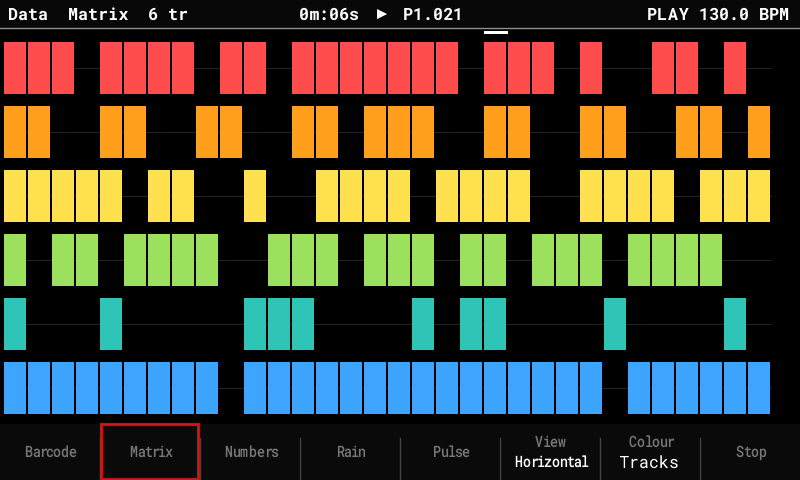
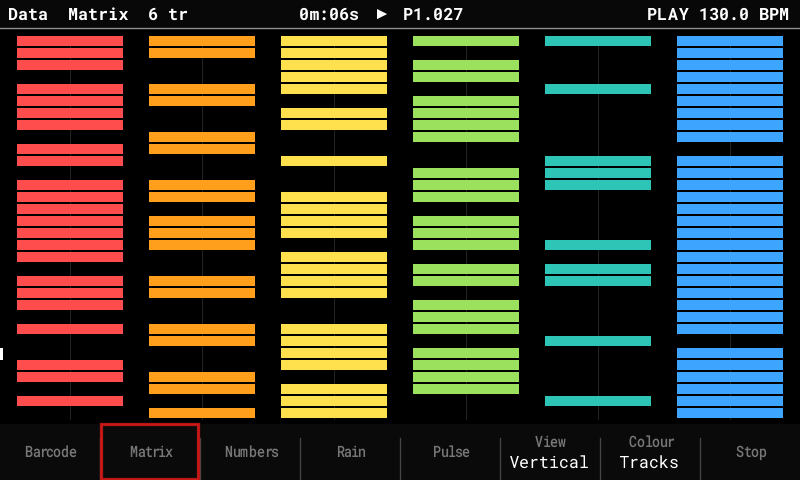
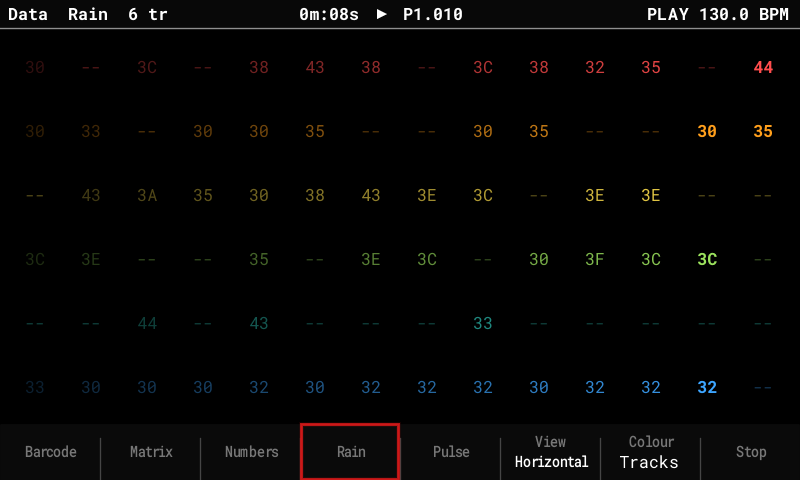
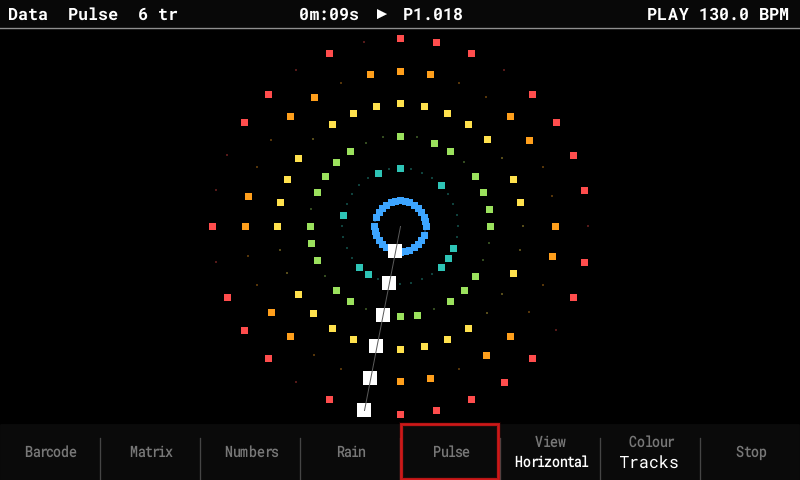
- Data screen (File, F7): Barcode, Matrix, Numbers, Rain and Pulse, horizontal or vertical, in three colour modes; only the tracks with notes, over the whole screen. Pads mute tracks, the encoder sets the tempo.
Build
- The fork builds without Games by default. Its flash budget is 800 KB (upstream 720 KB); the hard limit, the stock 1.9.2 image extent (877,664 B), is checked on every build. Image size about 792 KB; all host tests and simulator checks pass.
Screenshots (2.2.1, on an original Tracker)
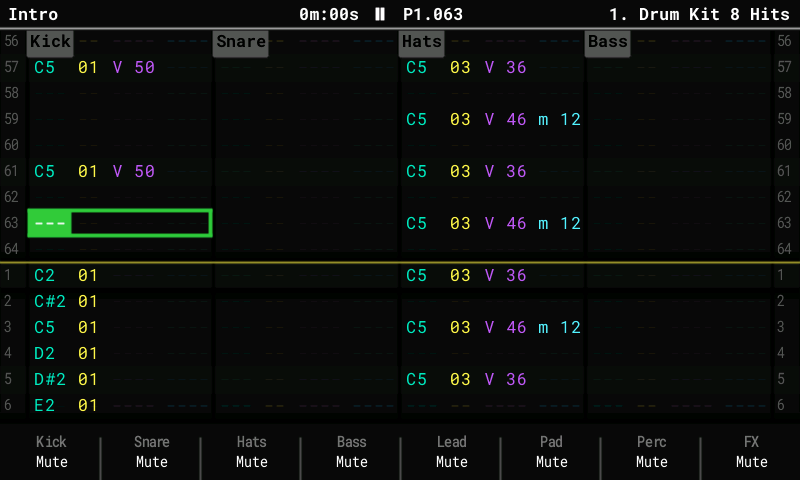
| Pattern (synth drums, FX) | 8-track view (Pattern + Note) |
|---|---|
 | 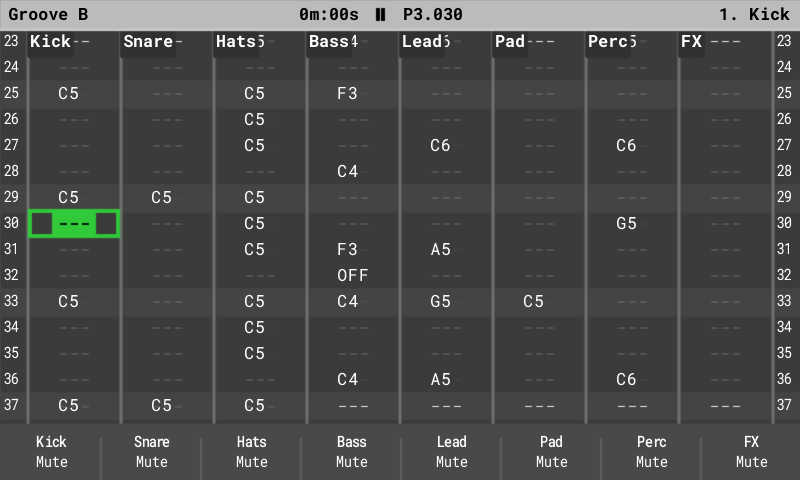 |
| Synth Parameters (ACD) | Edit Patch (PERC kit) |
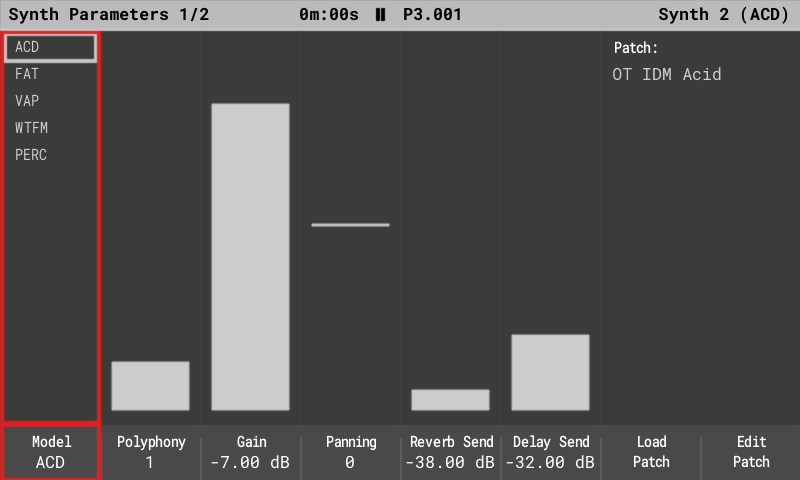 | 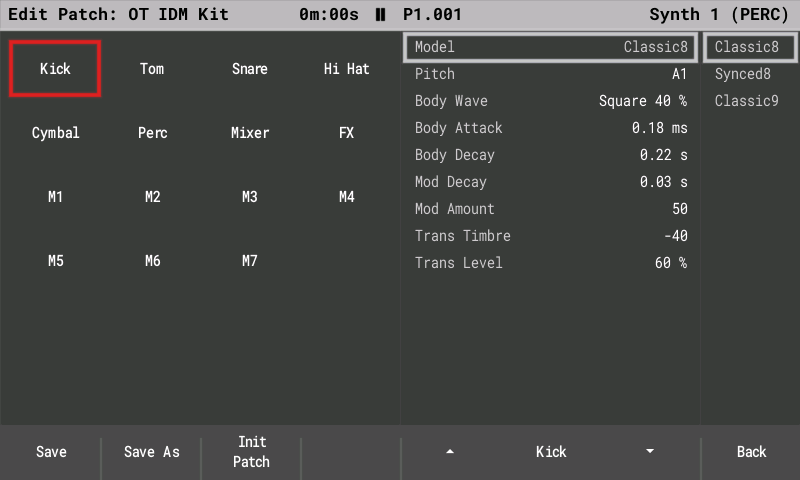 |
| Sample Editor, stereo sample | Live resampling |
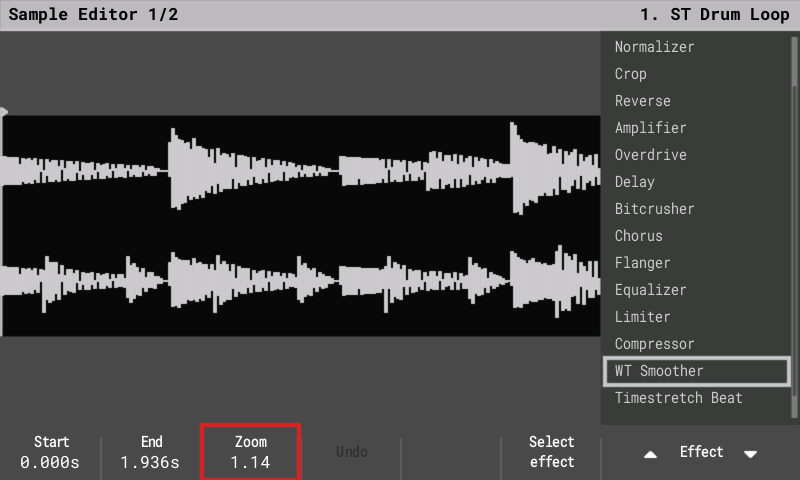 |  |
| Performance FX | Config: USB Storage |
 |  |
2.x brings the newer Tracker Mini features to the original hardware: 16 tracks, synth engines, stereo samples, Mini-compatible project files and USB Storage mode. These notes cover the whole 2.x line (2.0 to 2.2.1); the full list is in the release notes of the 2.2.1 download.
New in 2.1 to 2.2.1
- All five Mini synth models play: FAT (2.1) and WTFM (2.2) joined ACD, VAP and PERC, with
74 presets of our own in the preset pack (
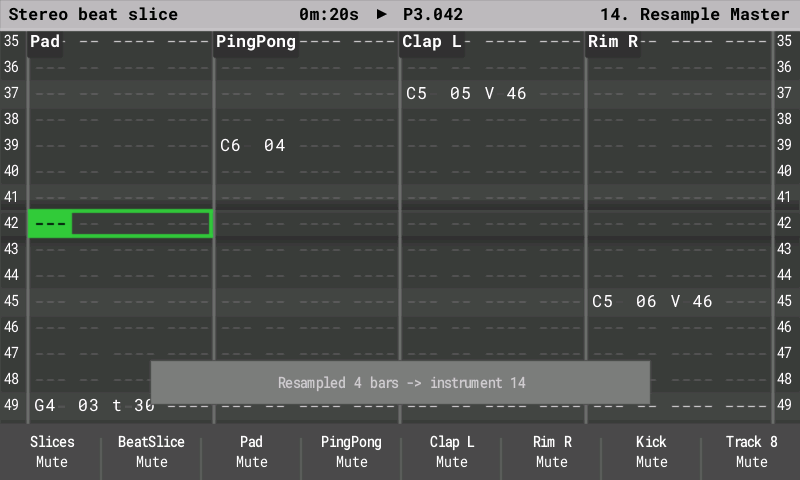
OpenTracker-Presets-1.2). - Live resampling (2.1.2, contributed by syamajala): record the mix, one track or Line In into a new instrument while the pattern keeps playing.
- Waveforms like the Tracker+ / Mini: sample envelopes, stereo samples as two lanes, and a preview playhead on the Sample Recorder and Sample Editor.
- Closer to the stock manual: about 30 details fixed after a check against the stock 1.9.2 manual (live-record velocity, Slice-mode pads, Performance labels, MIDI CC lists and more).
- User-report fixes: live recording (first note with Pre-roll, OFF steps, red cursor), MIDI channels on the pads, a crack in the headphones at power-on, headphone level +1 dB.
- More free memory: Games is no longer built into the image (
make OT_GAMES=1brings it back), and the file browsers share one buffer (PR #28, syamajala).
New in 2.0
Tracker Mini project compatibility
- Projects are saved in the Tracker Mini 2.2.1 format: 16-track patterns, the three synth slots, track names and mutes for tracks 13–16.
- Synth patches use the Mini's
.patchfiles. They are stored with the project and in a library atPatches/<ENGINE>/. All 299 Mini factory patches load and save back unchanged. - Older original-Tracker projects open as they are, with tracks 13–16 empty.
16 tracks
- Tracks 13–16 work like MIDI tracks 9–12: notes, MIDI channels, CC A–F, pitch bend, velocity, mute and solo. Performance Play mode, Pattern length and Step repeater act on them too (no voice FX, levels or per-track patterns, as on the Mini).
- Pattern pages through all 16 tracks. Song shows a scrolling 12-track window.
- Fill, copy and paste work across all 16 tracks.
Synth engines (instruments S1–S3)
- Three synth slots, played from any track as instruments S1–S3.
- Five engines, our own sound design following the Mini's parameter sets:
- ACD: acid bass and lead, with a 24 dB and a ladder-style filter, and glide;
- VAP: virtual-analog poly, with morphing oscillators, hard sync, 15 filter types and a 6-slot modulation matrix;
- PERC: drum kit with kick, snare, hats, cymbal, perc and tom;
- FAT (2.1): a stack of detuned saws for supersaw pads, leads and basses;
- WTFM (2.2): two-operator wavetable FM, from electric pianos to bells.
- Macros: FX columns A–F drive macros 1–6, and Volume drives macro 7.
- Voices: a shared pool of 4 voices by default, adjustable in Config > General > Synth voices (1–8).
- Screens, after the Mini's layout:
- Synth Parameters: model, polyphony, gain, pan, sends.
- Synth Macros.
- Edit Patch: sections on the pads; Save, Save As, Init.
- Load Patch popup with Preview.
- Synth 1–3 level columns with meters on Global Mixer page 3.
- Exports include separate stems
synth_1..3.wav.
Stereo samples
- Stereo WAVs keep both channels on import.
- They play in stereo in one-shot, loop, slice and beat-slice modes. Pan works as balance.
Performance and monitoring
- CPU meter in the title bar (Config > General > CPU meter: Auto, Always or Off).
- Voice limiter: if the audio gets close to its limit, only synth voices are cut; sample tracks never are.
- Faster loading: project loading does about half the work in our host model (not yet timed on the device).
- Smoother display: frames go to the screen over DMA without waiting.
- More code in fast internal RAM: the hottest audio and synth code runs from it.
- USB serial diagnostics: CPU, peak breakdown, display, SD and radio/recorder lines.
USB Storage mode (2.0.1)
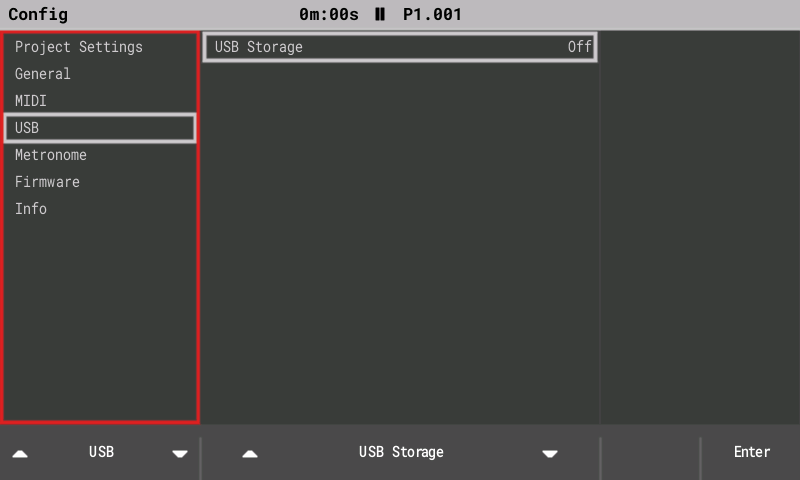
- Config > USB > USB Storage: On shows the SD card on a connected computer as a USB drive, as on the Tracker Mini. Copy projects, samples and patches without taking the card out.
- Playback stops and the project is saved first. Keep the power and the USB cable connected while files are transferred.
- To finish: eject the drive on the computer, then press Exit (or set the row back to Off). The project reloads from the card. If the computer still uses the drive, Exit first reminds you to eject it.
- The setting is always Off after power-on.
- About 1 MB/s (full-speed USB; measured 1,033 KB/s on a real Tracker). Tested with Linux and macOS; Linux can take a few seconds longer to notice the drive. USB MIDI and the serial log keep working.
- If the cable is pulled during a transfer, the Tracker recovers within half a second.
- The drive has a stable serial number, so a computer keeps recognising the same Tracker. On Windows, the Tracker may appear once as a new device (new COM/MIDI port).
Install
- Copy
PolyendTrackerOTv221.ptf(this fork:PolyendTrackerOTs221.ptf) to/Firmwareon the SD card. Keep the name; the bootloader only accepts 24-character names. - Go to Config > Firmware update, select it and confirm. If the screen stays dark after the update, press the power button once.
Going back: keep the stock PolyendTracker_1.9.2.ptf in /Firmware. Install it the
same way, or put its file name into /Firmware/ot_restore.txt and power-cycle. Keep only the
image you want, plus stock, in /Firmware: the rear reset button installs a random .ptf
from that folder.
Stack guard: 2.x stops a stack overflow with a reset and says "Restarted after a crash
(stack overflow)" on the next boot. To run without the guard, put an empty
/Firmware/ot_noguard.txt on the card.
Note: projects saved by 2.x use the Mini's 16-track patterns. Stock firmware for the original Tracker reads only tracks 1–8 of those patterns (expected from the stock loader's rules; not yet confirmed on a stock unit).
Known limitations
- The synth sound is own design: settings match the Mini, the sound is close but not identical.
- The synth voice pool defaults to 4 because of the processor's speed.
- USB Storage mode: back up the card before first use; Linux systems without a desktop may need
partprobeor a re-plug to see the card. - The USB ID is the pid.codes test ID 1209:0001.
- Live resampling from Line In starts 10–14 ms late (the round trip through external gear); compensation is planned.
- Games (the NES player) is not in the release image since 2.2.1.
Test songs
The package's Projects/ folder holds eleven OT Test songs (among them one per synth engine
and an IDM track using three engines at once) and seven BLAST GRID synth remixes
(Title, World 1, World 4, Battle, Battle FM, Boss, Final Boss). Copy them to /Projects on
the card.
Downloads: https://github.com/sandlbn/polyend-tracker-re/releases