Spatial Disorientation — 0.4.0-beta3
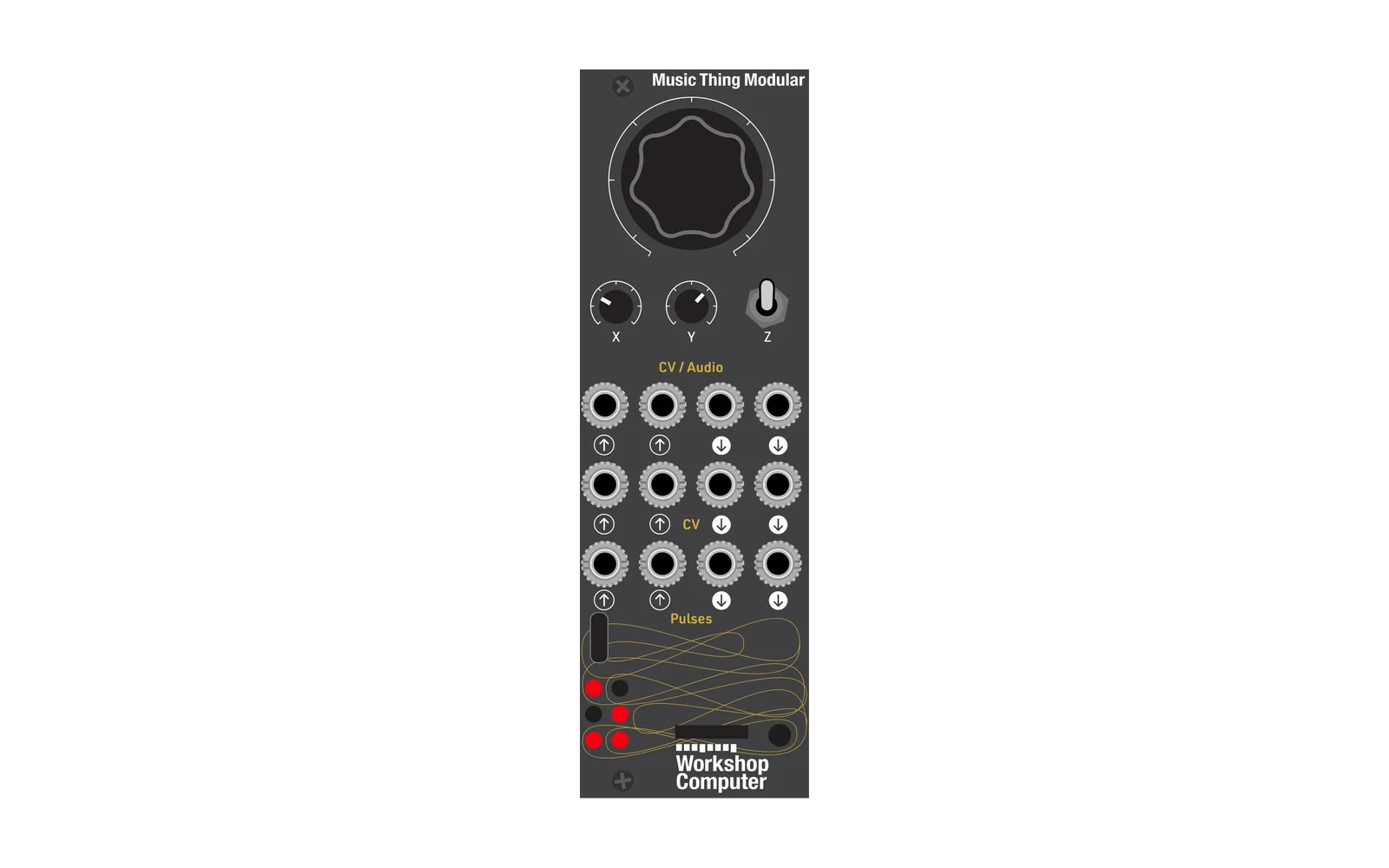
Two independent mono sources placed and moved in headphone stereo on the Music Thing Modular Workshop Computer. Inspired by Neuzeit Instruments Quasar, with an independent implementation. Three startup modes: Twin Orbits, Spatial Mixer and Disorientation (Fig8, Pendulum, Wander). This beta includes Orbits height/slope and two8mu pages, continuous Mixer height, vertical Disorientation, elevation randomise/reset tools and the tested repeated-save fix. Pitch/roll motion directly places sound, with corrected roll polarity: right edge down moves right; yaw is unused.
Original code and documentation © 2026 Adrian Vos (soveda), MIT. Measured ear filters: Bill Gardner and Keith Martin, MIT Media Laboratory (1994), HRTF Measurements of a KEMAR Dummy-Head Microphone, Technical Report #280; separate data terms. ComputerCard, Workshop_BlockAudioCard, WaveSeq/EightMU/rppicomidi, Pico SDK, TinyUSB and linked runtime credits/licenses: THIRD_PARTY_NOTICES.md, firmware notices, build-component notices and the local ComputerCard0.4.0 flash-pause adaptation. MIT does not relicense data or dependencies. No Quasar firmware, graphics or transfer functions are included.
Get started
- Download the beta UF2. Checksums identify the current binary. Back up existing presets with your old editor before using this beta's Save to card.
- Put the Computer in its normal BOOTSEL firmware-loading mode and copy the UF2 to the mounted drive. Reset with Main/X/Y near centre.
- Connect Audio In 1 and/or 2 to mono sources. Unplugged inputs are silent. Audio Out 1 is left ear, Audio Out 2 right ear. Use an appropriate stereo headphone monitoring path; connect these modular-level outputs through that path.
- Normal startup selects Twin Orbits. To select another mode, hold the switch Down during reset, choose with Main and release to confirm:
| Main region | Mode | Startup LEDs |
|---|---|---|
| Lower third | Twin Orbits | None |
| Middle third | Spatial Mixer | Left column |
| Upper third | Disorientation | Right column |
Startup selection is not saved. Each mode has its own saved settings. Headphones are the listening target; generic HRTFs vary with listener/headphones. Elevation may sound subtle or partly like spectral changes rather than a precise physical position. Speaker stereo/mono will not reproduce the same binaural scene.
Panel and patch controls
| Control | Twin Orbits | Spatial Mixer | Disorientation |
|---|---|---|---|
| Main | Position offset | Selected-source position | Fig8/Wander front/back depth; Pendulum arc centre |
| X | Signed orbit speed | Selected-source distance | Signed traversal speed |
| Y | Distance | Selected-source level | Path excursion |
| Switch Up | Linked | Select A | Linked |
| Switch Middle | Opposing | Keep selected source | Opposing |
| Down | Reset phase once per press | Select B; release retains B | Hold to freeze phase; release resumes |
| CV 1 | Adds position | Adds both positions | Adds depth/arc centre |
| CV 2 | Adds distance | Adds both distances | Adds excursion |
| Pulse 1 | Movement clock | Unused | Movement clock |
| Pulse 2 | Phase reset | Unused | Phase reset, including while frozen |
X has a centre stop region; its manual maximum is ±1.5 cycles/second. Clock input sets movement cycle length with the editor's pulses/cycle (default 4). CV outputs stay nominal zero; pulse outputs stay low. Mixer uses soft pickup after selecting, restoring or remotely editing a source; move Main/X/Y near or through the stored value to regain control. Each source retains its position/distance/level.
Fig8 is a crossing path with independently phased sources. Pendulum sweeps an arc through the selected centre; Wander follows repeatable smoothly eased targets. Changing movement preserves phase. Freeze holds phase only: knobs/CV/live motion can still reshape held positions. Pulse reset and 8mu A still reset while frozen.
Web editor and presets
Use the matching beta editor, web/index.html, in desktop Chrome/Edge with WebMIDI/SysEx permission. Use a USB-C data cable, close Serial Monitor/other MIDI apps and choose “Spatial Disorientation” for both ports. iOS is unsupported. If opening the local file blocks MIDI, run this from the unpacked tester bundle or repository:
python3 -m http.server 8804 --bind 127.0.0.1 --directory web
Open http://127.0.0.1:8804. Hosted editors require HTTPS. This package does not
publish a new hosted editor automatically. Editors using protocols before v7 are
incompatible. Beta2 and the 0.3/0.4 alpha editors using protocol7 work, but this
editor documents the current motion mapping.
Select the desired startup mode before connecting or applying its settings.
Changes wait for Apply; there is no automatic send. Read replaces displayed edits with current card values. Save to card persists applied settings and briefly fades audio for the flash write. Reset to init applies factory editor settings for the active mode; it does not save automatically. Export downloads the displayed settings; Import stages them until Apply. Preset names live in JSON files, not card flash. Three separate settings banks preserve inactive modes.
At the bottom, Randomise elevation stages new height/slope values for the shown mode; Reset elevation stages level height and zero excursion/tilt. These tools leave other sound settings alone and send nothing until Apply. Random combinations avoid immediate height clipping. Mixer randomises/resets A/B height only. Orbits Apply/init checks height/tilt readback and reports a mismatch rather than claiming success if the card returns old values.
Shared settings: separation/phase separation, room reflections, A/B level trims, spatial strength and clock division. Separation and clock division are unused in Mixer. Mixer Read/Save capture both current placements and applied heights.
| Height/path setting | Behaviour |
|---|---|
| Orbits height centre | −40° to +40°, both sources, independently saved from Disorientation |
| Mixer A/B height | Continuous −40° to +40°, independently saved/exported |
| Disorientation height centre | −40° to +40°, both sources |
| Vertical excursion | 0–40° half-range; phase-related Fig8, lifted Pendulum ends, eased Wander height |
| Uphill direction | 0° front, 90° right, 180° back, 270° left; continuous diagonals |
| Path tilt | 0–40° inclination; zero bypasses slope |
Slope rotates horizontal direction toward the chosen uphill bearing and changes its horizontal projection. The opposite bearing goes down; perpendicular positions remain level. Path distance stays the original path distance. This is inclination about the listener, not rotation of the translated path about its own centre. Existing height centre/bob is added after slope, then clipped to ±40°; combined bob+tilt is not one rigid plane and large settings can flatten peaks. Start at centre 0°, excursion 0°, tilt 40°, slow X to audition slope alone. Reset can return to an elevated point if that reset direction is uphill. The live diagram shows direction only; its radius does not represent distance.
Migration and downgrade
Beta3 uses SysEx7 / preset JSON7 / flash8, compatible with beta2, the0.3.0 alpha1–3 and0.4.0 pitch/roll experiments. No settings migration is needed from beta2. It reads flash1–7 and imports JSON1–6, preserving supported old fields. Migrating beta1 defaults only the new Orbits height/slope to level/zero tilt. Older missing Mixer heights default to level; missing vertical excursion/tilt to zero. No automatic boot migration write. Beta1’s editor uses an older protocol; use the matching beta3 editor. Each mode still has its own settings bank.
Export old presets before beta3 Save. Apply-only leaves old flash intact. After beta3 Save, beta1 cannot read flash8 and starts defaults. To downgrade, load the archived beta1 UF2/editor, import your old exports and explicitly Save in each desired startup mode. Beta1 cannot import JSON7. The0.3.0 alpha1/2/3 and 0.4.0 pitch/roll alphas have the same formats as beta3 and need no schema downgrade. Archived versions.
Direct 8mu control
Connect8mu and reset separately from an editor session. Rev1.1 detects USB power role at boot; older boards retain editor/device operation. Reset after changing roles. Mixer ignores motion; Orbits/Disorientation can replace Main with motion. Motion starts off, and CV remains additive. No8mu gesture writes flash.
Twin Orbits D tap/release under500ms toggles normal and height/slope pages. Holding D at least500ms shows timing; releasing that long hold keeps the page. Normal is selected on startup/connection. Brief8mu indication after page changes: LEDs1–3 = normal; LEDs6–8 = height, lit for1second. Then pickup/level feedback resumes: there is no persistent page indicator. These are8mu LEDs, not Computer LEDs.
| Fader | Orbits normal | Orbits height/slope | Mixer | Disorientation |
|---|---|---|---|---|
| 1 | Speed/direction | Height −40°..+40° | Selected distance | Speed/direction |
| 2 | Distance | Tilt0..40° | Selected level | Excursion |
| 3 | Separation | Uphill direction | Selected position | Phase separation |
| 4 | Room | Room | Room | Room |
| 5/6 | A/B trim | A/B trim | A/B trim | A/B trim |
| 7 | Spatial strength | Spatial strength | Spatial strength | Spatial strength |
| 8 | Tilt sensitivity | Tilt sensitivity | Selected-source height | Motion amount |
Faders1–3 rearm pickup on each Orbits page switch. Remote-owned speed/distance/ separation stay held while editing height; return to normal waits for pickup. Height/slope values also remain when leaving their page. Shared faders4–8 retain ownership. A fader waiting for pickup blinks. Normal panel controls remain available when not remotely owned. No change to Disorientation/Mixer page behaviour.
Orbits/Disorientation A resets/recentres at Main/current pose, B toggles motion, C holds phase. Motion/CV can still reshape held positions. C release restores the prior speed. Yaw is unused. Pitch controls front/back; roll controls left/right. The8mu reports positive roll when its right edge is raised; the mapping inverts that sign so sound follows the lowered edge. Capture neutral approximately flat.
- Orbits: tilt is a directional pointer relative to the captured Main anchor. At centre Main/reset phase, back edge raised points front; right edge lowered points right; front edge raised points back; left edge lowered points left. Combined tilt selects intermediate directions. Hold a pose to hold direction; returning near neutral holds the last direction. Fader8 sets tilt sensitivity: lower values need more tilt to engage, zero returns to the anchor. Once engaged, it retains full angular travel. X automatic orbit and CV remain additive; centre X and remove CV for direct positioning. Height/slope pages do not alter motion.
- Disorientation: pitch directly offsets bounded Main depth (positive pitch towards front); roll rotates the whole path towards the lowered edge, about±90° from flat at full amount. Fader8 scales both contributions; zero returns depth to its anchor and rotation to zero. Motion-off/disconnect eases rotation tozero; Main waits for panel pickup. A recaptures both axes/Main and resets rotation. Rotation follows the configured world-space slope. Height/bob/slope are set in the editor; there is no direct8mu elevation page for Disorientation.
Holding a pose does not accumulate movement. A captures neutral on either mode; C freezes phase but permits tilt/CV reshaping.
Disorientation D tap cycles Fig8/Pendulum/Wander, with LEDs1/2/3 briefly identifying movement; longD keeps timing. Mixer A/B select sources, C is unused and D is timing. Mixer LED8 identifies A steady/B blinking, with height brightness/pickup feedback.
Orbits disconnect restores saved height/slope and disables motion. Remotely owned X/Y wait for panel pickup; reconnect starts normal with fresh fader pickup. Runtime 8mu values do not change saved presets. For persistent height/slope use the editor and Save in a separate USB boot. Other8mu mapping/ownership rules remain unchanged.
LEDs, timing and known limits
The four upper LEDs show source A/B left/right direction pairs; equal brightness can mean front or back. Mixer selected pairs blink while panel pickup is pending. Bottom-left indicates linked movement or editing A in Mixer. Bottom-right latches a general warning: callback ≥18 µs, block ≥1200 µs, a queue fault or a failed save/resume (once callbacks run). Reset clears peaks/warnings. Startup LED patterns override runtime feedback.
Hold 8mu D for offline peak block-time bands: each lit LED represents 150 µs; eight lit means above 1050 µs. All eight flash if a timing/queue/save warning latched. A lit band alone is not a warning. The editor reports exact latched peaks and separate slow-DSP/callback/queue flags. Reboot between comparisons.
ComputerCard 0.4.0, 192 MHz / 1.15 V, 48 kHz, two sources / 64 taps. Core0 captures audio/controls; core1 renders 64-frame DSP blocks and services bounded USB work. Added transport latency is 128 frames, about 2.67 ms. Block deadline is 1333.3 µs; 1200 µs is an early warning. A missed output block can produce 64 frames of silence; late audio is discarded. Flash saves intentionally fade, stop ADC/DMA, lock out for verified flash access, then restart sampling in a known state before acknowledging. This fixes the tested repeated-save failure. Unchanged saves skip mute/erase; failures return an error and latch the general faultLED once callbacks run. A stopped core cannot guarantee LED feedback. Save pauses are excluded from timing peaks.
Beta3 ships the exact user-tested0.4.0-alpha2-roll-polarity UF2 bytes. The user reports its tests pass and requests promotion. This adds direct pitch/roll control and the corrected lean direction to beta2. Earlier save-fix, elevation and8mu page passes remain the baseline. No new peak values or duration were supplied with this pass; firmware/build checks supplement the user's hardware acceptance.
Historical timing context from earlier builds (not new beta3 measurements):
| Build / mode | Duration | Callback / block peak |
|---|---|---|
| Alpha26 Pendulum | 25min | 14 /1175µs; clean, no queue warnings |
| Alpha26 Fig8 | 20min | 14 /1176µs; no separate listening/queue report |
| Alpha26 Wander | 30min | 14 /1193µs; clean, no queue warnings |
| 0.3alpha1 opposing Orbits | 22min | 12 /1188µs; clean, no queue warnings |
No new pitch/roll alpha2 peak values or run duration were supplied with its pass. Headroom remains narrow; historical Wander was only7µs below the block warning. Additional testers should log their own board/headphones, controls/CV, duration and USBrole, covering editor and separate8mu boots. Protocol/feedback.
Source and build
Build with Pico SDK2.3.0 / Arm GNU Toolchain15.2.Rel1 or compatible tools:
cmake -S . -B build_beta -DPICO_SDK_PATH=/path/to/pico-sdk -DCMAKE_BUILD_TYPE=Release
cmake --build build_beta -j2
The beta defaults to64 taps/two sources. Source-A-only is diagnostic, not this
package. Build evidence, protocol,
design record, future options.
Pre-generated measured tables ship with the source; building firmware needs no
Python scientific libraries or measurement download. Mathematical slope-table
reproduction uses tools/generate_slope_table.py; measured-bank provenance and
archived elevation generator are recorded in the notices. Old preview audio is
historical, not proof of the beta's sound. Archive holds earlier
versions; current uf2/ contains only beta3 and its notices/checksum.
Beta2 is preserved with its source/editor/firmware and original tester bundle in archive/beta2. The two pitch/roll alpha experiments remain under archive/experimental/ for comparison; alpha1 uses the earlier reversed roll convention.
Repository layout
Current beta source, editor, firmware and regression tests are in src/, web/,
uf2/ and tests/. docs/ contains operator/test/design records; vendor/ and
licenses/ retain dependencies and attribution. dist/ holds the local current
tester ZIP. Archive index groups previous betas, all superseded
alpha experiments and historical audio previews. Old build caches are retained
locally under ignored archive/local-builds/; use a fresh build for current work.