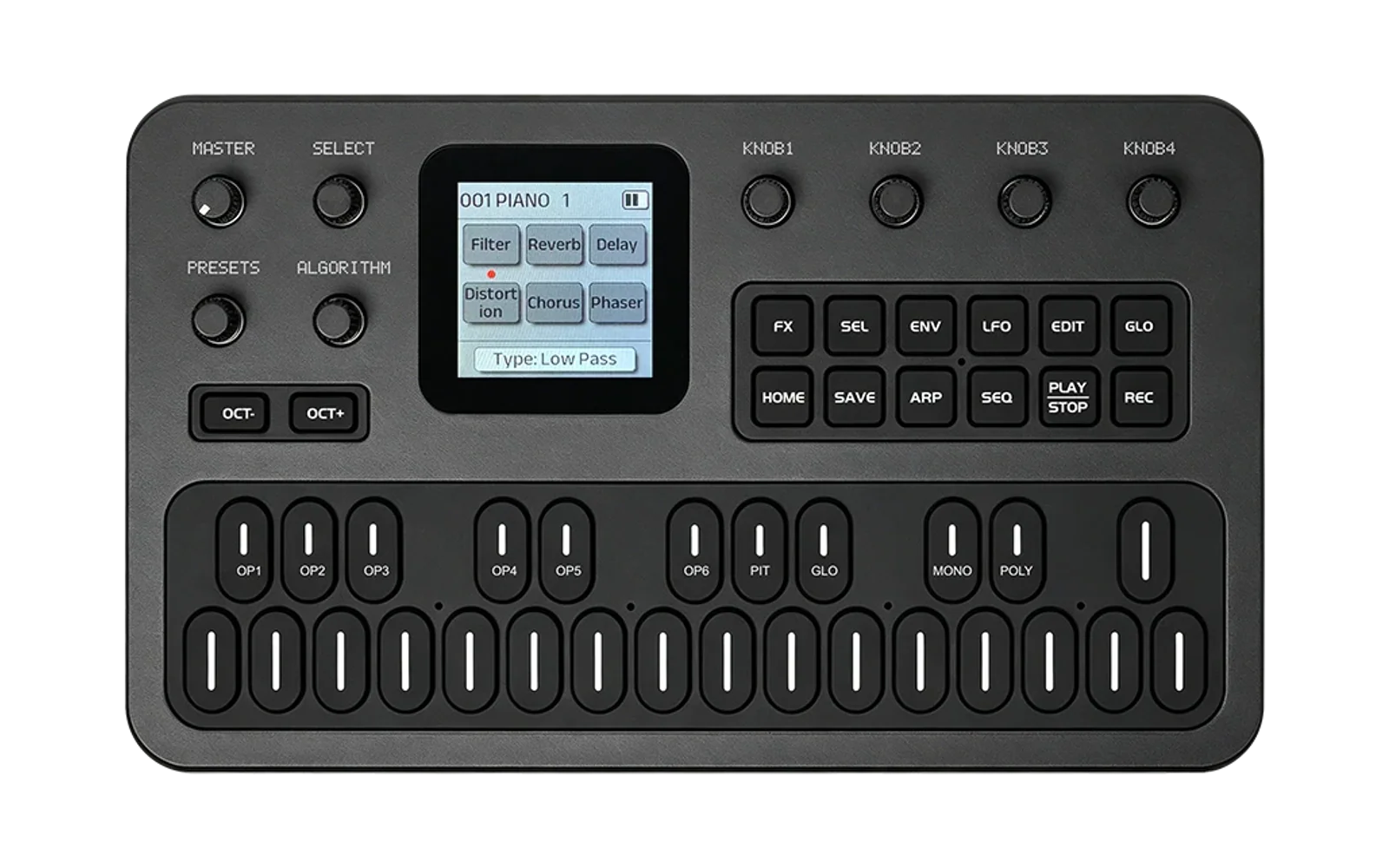
Skiff Go
A native Android (Kotlin, Jetpack Compose) editor and companion for the M-VAVE FM-1 running the
Skiff firmware. It talks to the FM-1 directly over USB-MIDI (Android
MidiManager) with Skiff's editor protocol: no WebView, no browser.
Sister app of Sloop Go (the SLOOP firmware). The two firmwares share Felucca's framing and commands 1–32 but differ from command 33 on, and some numbers mean other things on each: Skiff Go checks INFO and refuses any firmware but Skiff (2.0 or later for the piano roll's per-note ties).
Status
Phase 1, the skeleton, and phase 2, the sound:
-
connect to the FM-1 (the first likely port that answers INFO), read INFO with its tagged capabilities, refuse SLOOP / Felucca;
-
one request in flight (
Wire), replies matched to their request as the Skiff Editor does (replyMatches), knob SETs coalesced per control; WATCH 3 for the device's pushes (CHANGED, RELOAD, TRACK_CHANGED), TRANSPORT as the keep-alive (WATCH re-armed after a silence near Skiff's 3 s timeout), DUMP and the strips read again every 5 s; -
PLAY / STOP, RESTART, REC from the header;
-
Sound: every parameter of the selected track and the globals on the device's pages (the Skiff Editor's layout: ENV, LFO, MOD matrix, EDIT with the drum lanes' level, pan, tune and decay, VOICE, FX with DRIVE / INSERT / DUCK / delay / reverb / chorus, SCALE and CHORD, ARP, PATTERN), wide ids (P_COUNT 143), values as the device shows them, the engine and preset lists in the device's order, light tracks refused (PHYS and GRAIN on T5 and T6), INIT;
-
Mixer: six strips, LEVEL and MUTE by TRACK_MIX, PAN and the REVERB send by SET (selected) or TRACK_PARAM (others);
-
Sound files: Save to / Open a "felucca-patch" or "felucca-library" file of the Skiff Editor (values found by label, so a file from another firmware maps), played onto the track as the Skiff Editor's audition does.
-
Sequencer (SEQ): the piano roll on Skiff 2.0's note model (per-note ties, so notes overlap and a chord's notes end apart, as the device's NOTES page does; the firmware's own unfold / edit / fold, ported from
ui.candui_input.c): tap to put a note of the chosen length, drag it to move it, drag its right end to stretch it, hold it to take it out; four notes a step at most, no pitch twice, a single voice (MONO, LEGATO, UNISON) takes over. The drum grid for DRUM and DRUM-X (hold a cell for its accent). The picked step's sheet: velocity, accent, slide, chance, ratchet / FLAM, trig condition, nudge. LEN, DIV, SWING, GATE and DIR, undo and redo, STEP_CHANGED pushes. The playhead is computed (below).
Next: parameter locks and automation through MOTION, the song (pool, lists, chains, scenes, PERFORM), MENU settings, FM6, samples, backup. The playhead is not in Skiff's protocol: it is computed from the start of play (exact when the app pressed PLAY, to the poll's resolution when the FM-1 did), the tempo, DIV, LEN and DIR (FWD, RVRS, PING; not RAND, swing or the song's jumps), with an option to make the phone the USB MIDI clock master still to come.