Firmware
SEQ-4
Rising64/100SEQ-4 for M-Vave FM-1
SEQ-4 is custom firmware for the M-VAVE FM-1, by @devrvega. Open source under GPL-3.0, latest release v0.1.0 (October 2026).
forM-VAVE FM-1·by@devrvega
Unclaimed. Is this yours? Sign in with GitHub as @devrvega to claim it.
Download v0.1.0
seq4-0.1.0.fwsc· 595 KB
GPL-3.0· devrvega/SEQ-4·downloads come from the creator’s GitHub releases
1 releases
v0.1.0SEQ-4 0.1.0Latest1 file
The first release.
- Four MIDI sequencers, each on its own channel and USB port (four ports, A–D: 64 channels), up to 128 steps in eight pages, sixteen patterns each, all running together from one clock (its own, or USB or TRS MIDI clock).
- Six modes: Mono, Poly (seven notes a step, pick and place), Chord (types in two banks, voicings, spread, strum, bass, its own arpeggiator), Multitrack (eight drum tracks, each its own note, channel, length and division), Stochastic and Matriceal.
- Steps: velocity, gate up to tie and legato, octave, glide, timing offset, repeats or skip, and conditions (chance, A:B, previous, first, fill, fixed, locked and their opposites); ties by holding two steps; any division from four bars to 1/64, six directions, loops, swing.
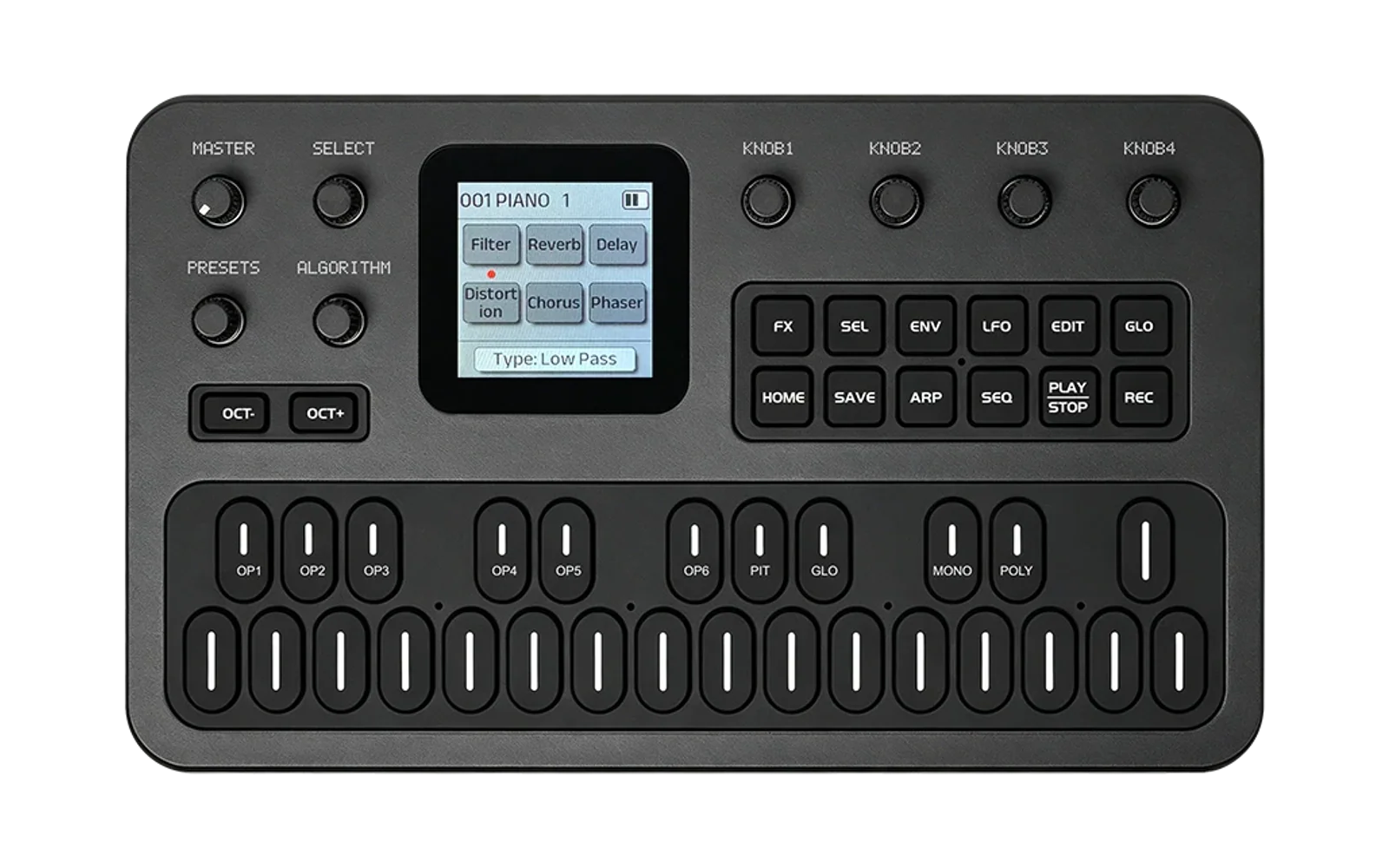
- On the panel: the screen is the grid (lit pads in each sequencer's colour); the white keys are the steps, the black keys the rows (Multitrack: its tracks), the page keys and MUTE; the knobs a step's values or every step's; menus on the knobs; a card for each button when held.
- The keyboard: notes, the chord keyboard, drum pads; pitch bend, mod wheel, a roller.
- Recording live (count-in, metronome click, quantize, overdub, loop / one shot / extend), step by step, and MIDI capture.
- Generators: random perform, a random generator (with humanize, shuffle, invert), Euclid, and a drum generator on Grids' map.
- Modulation: two LFOs a sequencer, mod lanes (a CC, bend, pressure or program a step), MIDI mappings with learn; a harmonizer that follows another sequencer's chords; 31 scales.
- Live: mutes and solos, fills, snapshots, tap tempo, nudge and time bend; songs of patterns (ten, four lanes of fifteen slots); program changes and transport CCs both ways.
- Saving: a log in the FM-1's flash for the project, 64 patterns and the songs; saves while playing, tidies up while stopped; undo and redo.
- Measured on an FM-1: the engine ticks every 0.73 ms; all four sequencers at their busiest take at most 545 µs of a tick; sixteenths at 120 BPM arrive within 0.4 ms (standard deviation) of each other.
- In the browser: the same code, playing your synths through Web MIDI.
- Fixed before release: changing patterns on sequencers 2 and 4, or giving back a snapshot, crashed the FM-1 (a word copy of a sequencer that was not word aligned); and after a crash in the audio interrupt, safe mode's USB never came up. The tests now also run every scenario under the address and undefined-behaviour sanitizers.
Install
- From the browser (Chrome or Edge, the FM-1 on USB): the web installer. Or try it in the browser first.
- From the command line:
python3 tools/fm1_install.py seq4-0.1.0.fwsc(Python 3 withpip3 install mido python-rtmidi). - Going back: the installer's "Back to the stock firmware", or M-VAVE's M-UPGRADE.
The firmware is
seq4-0.1.0.fwscbelow; its source is this tag. Installing other firmware is at your own risk; see the manual's Troubleshooting.