Oscuro File Bridge
A small, working prototype for keyboard ↔ smartphone communication over USB, where the phone is the USB host and the keyboard is the USB device.
- The keyboard runs a RAM payload (no flashing) that shows a small scrollable file list on its 240×240 LCD and speaks a tiny vendor-bulk protocol.
- A minimal Android app (USB Host API) exposes a fake file list to the keyboard and reads the keyboard's own fake list back.
- A Mac/Linux mock (
tools/usbfiles_host.py, pyusb) does the same, so the firmware can be exercised without a phone.
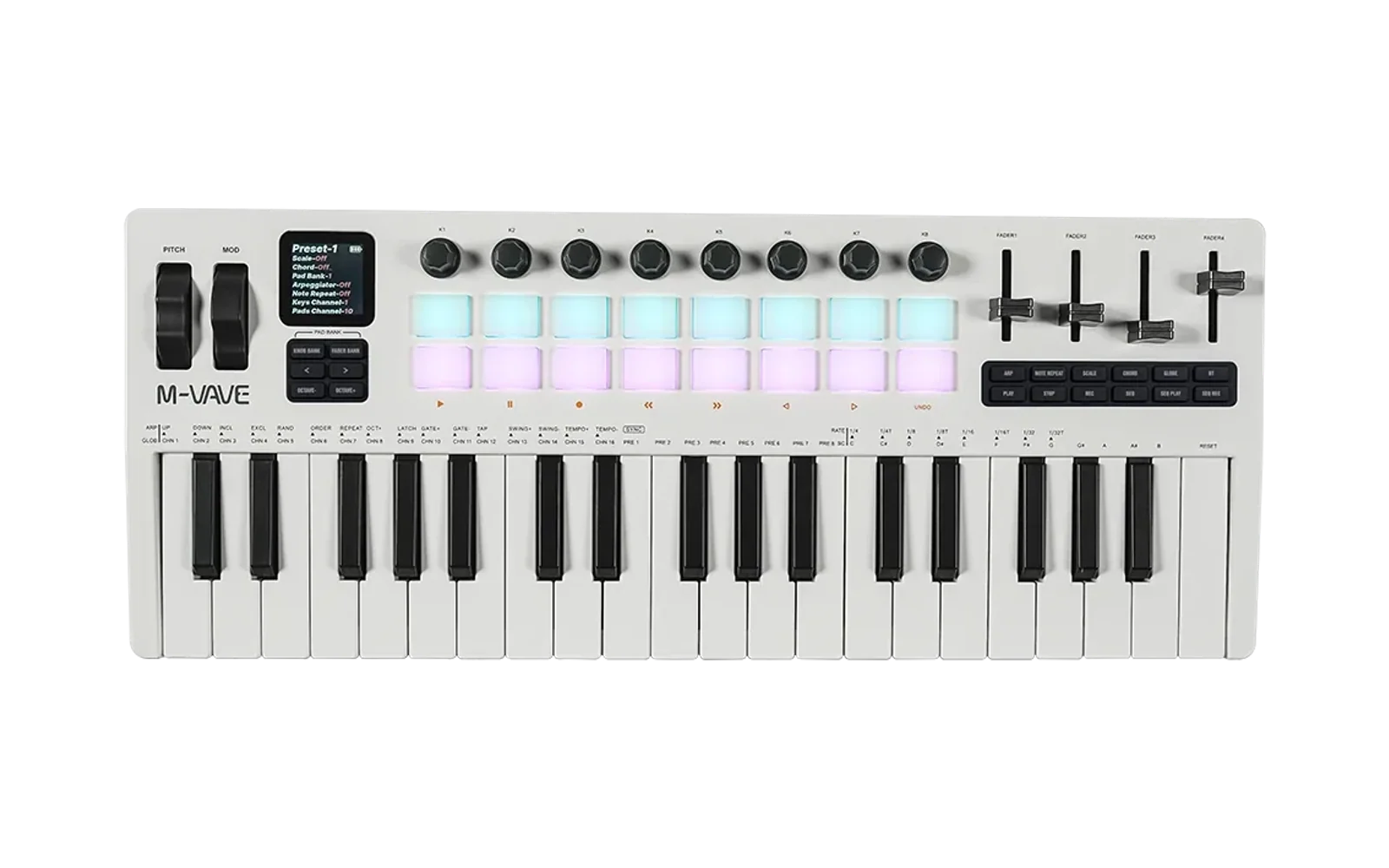
The keyboard side targets the M-Vave SMK-37 (JieLi AC791N / WL82) as part of the Oscuro open-firmware project. The payload is uploaded into SRAM from the chip's ROM UBOOT and lives only until power-off.
   phone / Mac  (USB host)                     SMK-37 keyboard  (USB device)
   ┌────────────────────┐   bulk EP1 0x01/0x81  ┌──────────────────────────┐
   │ Android app        │ ────────────────────► │ usbfiles.c (LVGL list)   │
   │  fake file list    │ ◄──────────────────── │ usbven.c (vendor device) │
   │ Python mock        │   Oscuro File Bridge  │  fake file list          │
   └────────────────────┘                       └──────────────────────────┘
Layout
| Path | What |
|---|---|
firmware/ | The keyboard RAM payload sources (usbfiles.c, usbven.c/.h, usbfiles_proto.h) and the UBOOT runner. Built inside an Oscuro checkout — see firmware/README.md. |
android/ | The Android USB-host app (Kotlin, platform android.hardware.usb only, no third-party deps). |
tools/usbfiles_host.py | Mac/Linux host mock (pyusb). |
docs/PROTOCOL.md | The wire protocol and the two-way session. |
docs/PROTOCOL_V1.md | v1 draft spec: tagged-field messages, files service, control, UI tiers (announce, entities, screen, control), compatibility with v0. |
docs/FEASIBILITY.md | What fits the SMK-37 (storage, USB, RAM), the proposed profile and what still needs measuring. |
docs/PROPOSAL.md | Proposal for extending it: listing, fetch, create/rename/delete, two-way transfer, capability/format filtering, and audio/MIDI capture. |
docs/REMOTE_UI.md | Proposal for the whole-device semantic remote UI: the device describes what's shown and available; the companion lays it out its own way (no LVGL/pixels). |
docs/INTEGRATION.md | How to build/run the firmware and where each piece plugs in. |
Quick start
Android (self-contained): open android/ in Android Studio and Run on a
phone with USB-host support (see android/README.md).
Firmware (needs an Oscuro checkout): copy the four payload sources into
<oscuro>/firmware/ram-lvgl/, apply firmware/build.py.patch, build and run —
full steps in docs/INTEGRATION.md.
Mac mock (no phone): pip install pyusb, then
python tools/usbfiles_host.py --seconds 60 while the payload runs.
Status
Verified on hardware 2026-10-13: the payload enumerates as the vendor device
1209:0003 "Oscuro File Bridge", the scrollable list renders on the SMK-37 LCD,
and fake lists are exchanged in both directions (phone app and Mac mock).
Roadmap
The prototype exchanges fake lists only. docs/PROPOSAL.md is the design for a
real file service (directory listing, fetch, create/rename/delete, two-way
resumable transfer, capability/format filtering, and later USB audio/MIDI
capture); docs/REMOTE_UI.md adds a whole-device semantic remote-UI model. Both
are proposals, not implemented.
Limitations
- Prototype only: fake files, no real storage, no file transfer.
- The firmware half builds only inside an Oscuro checkout (LVGL 9.6 + the JieLi pi32v2 toolchain + the ROM-UBOOT upload path); only the Android app stands alone.
- VID:PID
1209:0003uses pid.codes' shared test space — get a real PID before anything resembling a release.
License
Apache License, Version 2.0 — see LICENSE and NOTICE.
Permissive by design: implement the protocol or use/modify this code freely; the
only requirements are attribution (keep the copyright and NOTICE) and the
usual no-misrepresentation terms. The goal is wide adoption and
interoperability, so there is no copyleft and no restriction on using it in
closed products.