felucca-bsp
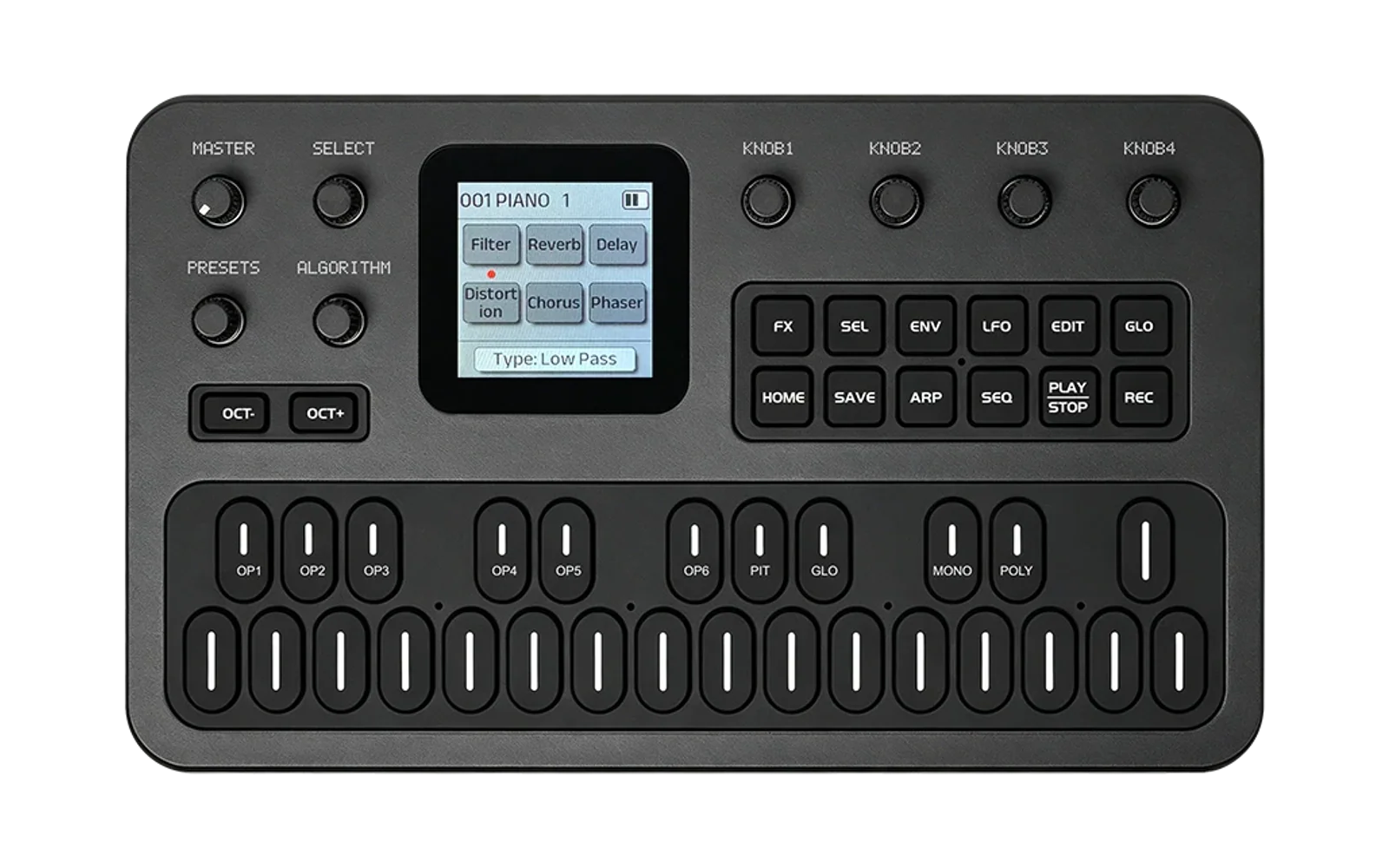
A base for custom firmware on M-VAVE synthesizers built around JieLi chips. It holds the chip layer (clock, interrupts, flash, USB, UART, timers, boot entry) and one directory of board code per device. It has no sound code and no user interface.
Named after its first user, Felucca; it is not tied to that application.
Unofficial. Not affiliated with or endorsed by M-VAVE or JieLi. Product and company names belong to their owners.
Experimental parts. Some features here are beta: the second core (
chip/fm1_cpu1.*) and expanded flash (chip/fm1_flash_ext.h). USB MIDI host is ported from Melodee, where input has run on hardware; this BSP port and its OUT path still need device validation. A higher clock remains a concept. What is established and what is not: docs/EXPERIMENTAL.md. The safe test firmware (examples/hwtest/hwtest.bin) contains none of them. Bluetooth MIDI and WiFi, on JieLi's own radio libraries, are in fm1-base, which builds on this repository.
Licences: settled. The files here are MPL-2.0. Leo Kuroshita confirmed it for the Felucca code he owns (#4), and keremimo for his part of
chip/usb.c(#3). Details in LICENSING.md and NOTICE. The USB host port also has permission from Adrien Tibi (Recursive Field Instruments): Melodee #75.
Licence notes before you start
- A fork of Felucca cannot move to MPL-2.0 by using this repository. To use another licence, start a new project and import this one: Forks of Felucca.
Status: beta. Split out of Felucca. Firmware is built on it through fm1-base, and two firmwares are its proof points so far: CTL-1 (Bluetooth MIDI) and Radio (WiFi). Expect changes to file names and layout.
Devices
| Device | Status |
|---|---|
| M-VAVE FM-1 | Supported. Used by Felucca. |
| M-VAVE SMK-37 Elite | Planned. Not started. |
| M-VAVE SMK-37 Pro | Planned. No board support yet. |
"Planned" means the device is a target, not that it works. A device gets its own directory
under boards/ once someone has it running. Pin maps and other board facts are added only
when they have been checked on a real unit.
Layout
| Path | What |
|---|---|
chip/ | Registers, drivers and boot entry shared by the chip family; libc.c (the few routines a freestanding build needs); ota.c (the update session, which takes its hooks from the application); fm1_perf.h (cycle and stall counters) and fm1_debug.h (register access for development builds) |
chip/usb_host.c, chip/usb_host_desc.h | Opt-in USB MIDI host: direct or one powered hub, MIDI input/output; API and limits |
chip/usb.c | The USB device: MIDI, serial and audio classes (audio in, and with FELUCCA_UAC_OUT audio out) with the EP0 and poll code |
chip/fm1_sys.h, chip/fm1_guard.h | Supply rails (VDC14 and SYSVDD at M-VAVE's levels), reboot and core reset; hardware guards (stack, write and fetch limits that end in the fault report), the stack floor, whether code runs in an interrupt |
loader/ | The update loader (builds as a RAM image; it includes chip/usb.c, chip/ota.c and chip/libc.c) |
boards/fm1/ | FM-1 wiring and drivers: LCD pins, key scan (with velocity and pressure from the keys, off by default: fm1_input.h), ADC channels, audio codec lines |
docs/EXPERIMENTAL.md | Second core, expanded flash, USB host, clock: what is established and what is not |
docs/CPU.md | What the CPU has been seen to do: 64-bit multiplies among 16-bit loads leave a register a bit off; keep them out of line |
tools/ | Package builder (fm1pkg.py), USB-MIDI installer (fm1_install.py), fm1_rescue and get_sdk.sh (JieLi's SDK, fetched and checked by hash) |
examples/hwtest/ | Test firmware for a real FM-1: screen, knob, buttons, LEDs, USB serial. hwtest.bin is the safe image; hwtest-exp.bin adds the experimental parts |
examples/felucca/ | Reference only: ota_hw.c, the hooks Felucca gives ota.c. Not built here |
Headers include each other by file name. Build with -Ichip -Iboards/fm1. The loader builds from this tree with
the JieLi toolchain and gives the same image as it does inside Felucca.
tools/ has the package builder, the USB-MIDI installer and fm1_rescue (stock firmware back on an FM-1 that cannot
start, through the chip's update mode; macOS) (the loader marker FELUCCA-LOADER-1 is part of the loader's contract). The loader, ota.c and usb.c
still use FELUCCA_* macro names; they will be renamed. usb.c needs uac_fir.h (generated by Felucca's tools) only
when its 48 kHz audio option is on.
Licence
MPL-2.0, applied per file: if you change a file from this repository and distribute it, you publish your change to that file. Your own code on top of it may use any licence. This repository can be combined with GPL code (no "Incompatible With Secondary Licences" notice). See the notes at the top. Credits, including the JieLi SDK (Apache-2.0), are in NOTICE.
Firmware that uses this base
| Firmware | Device | Licence | About |
|---|---|---|---|
| Felucca | M-VAVE FM-1 | GPL-3.0-only | Multi-engine synthesizer firmware with a sequencer and a web editor. |
| fm1-base | M-VAVE FM-1 | MPL-2.0 | A base and template for FM-1 firmware: platform, host simulator, browser emulator, Bluetooth MIDI, WiFi, USB audio. |
| CTL-1 | M-VAVE FM-1 | MPL-2.0 | A MIDI controller with velocity and aftertouch, scales and chords, an arpeggiator, a Euclidean drum sequencer and GM sounds; USB and Bluetooth MIDI. On fm1-base. |
| Radio | M-VAVE FM-1 | MPL-2.0 | An internet radio over WiFi: Radio Garden's stations, MP3 and HE-AAC, punch-in effects. On fm1-base. |
Using the base? Open an issue with the "List your firmware" form. We add the link and a short description. Rules are in LISTING.md.
Contributing
Issues and pull requests are welcome. By contributing you agree that your change is licensed under MPL-2.0. Keep changes small and say which device you tested on.