Digitakt II splash screens
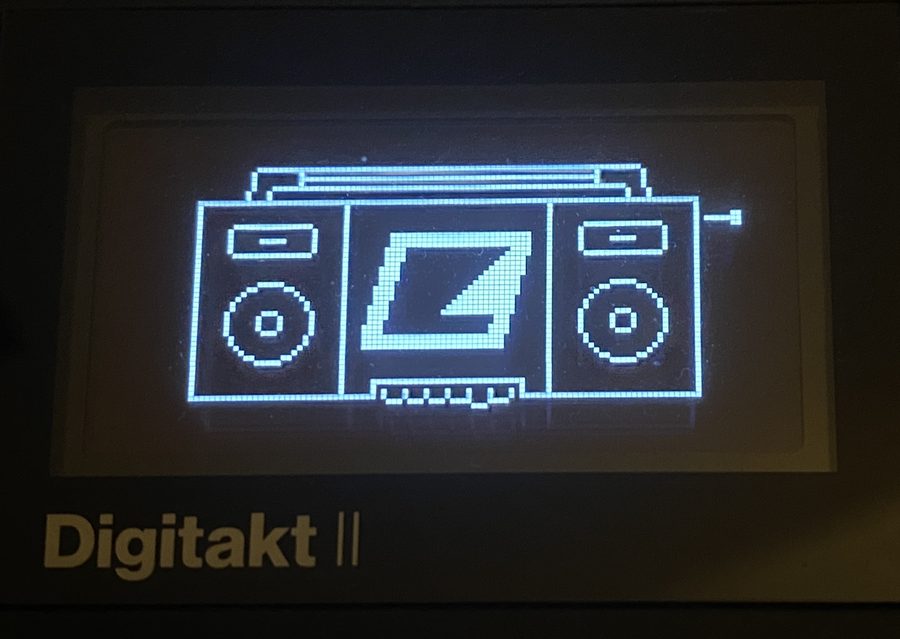
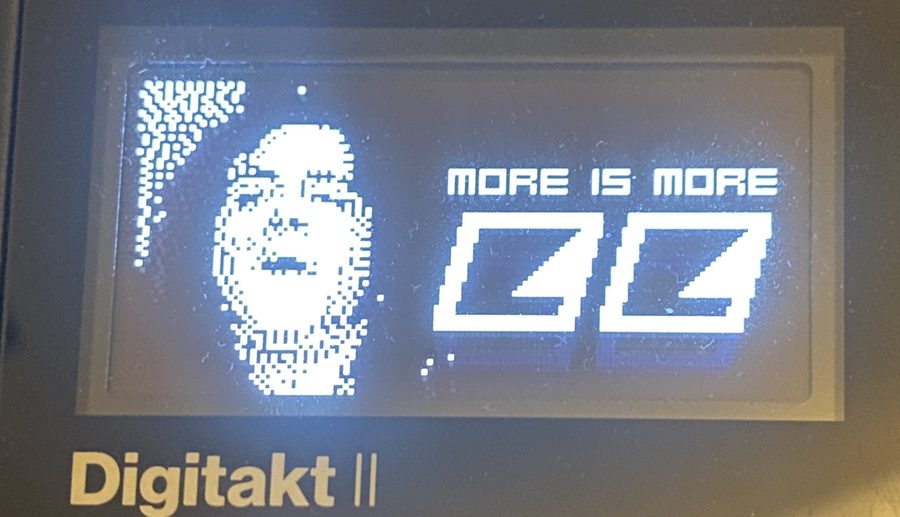
The Digitakt II picks its boot animation at random from five of them. You have almost certainly only ever seen one.
This repository contains a 16 byte patch that makes all five appear, and the scripts to apply it to a firmware image you already have.
It contains no Elektron firmware, artwork, fonts or code.
The five
All photographed on one instrument after the patch, across ordinary restarts.
 |  |
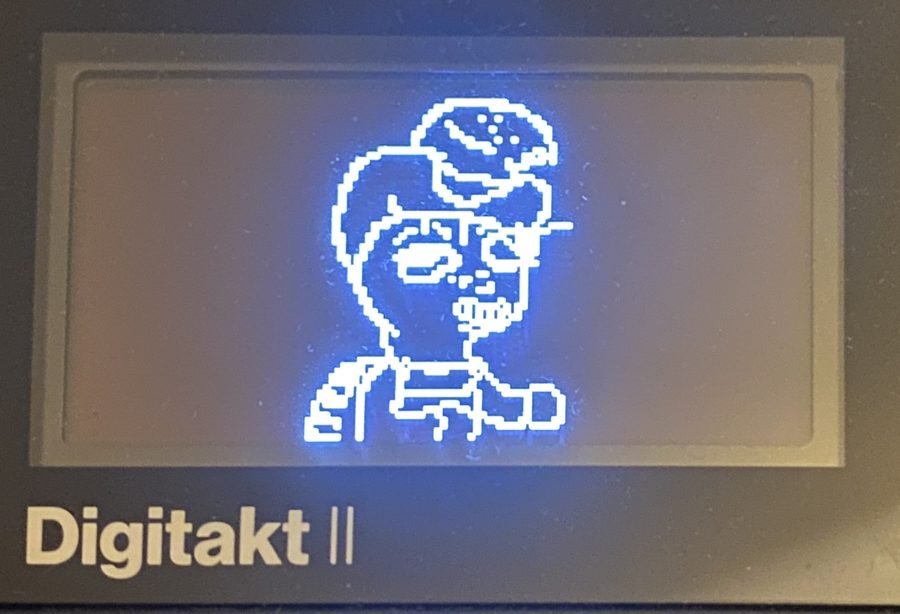 | 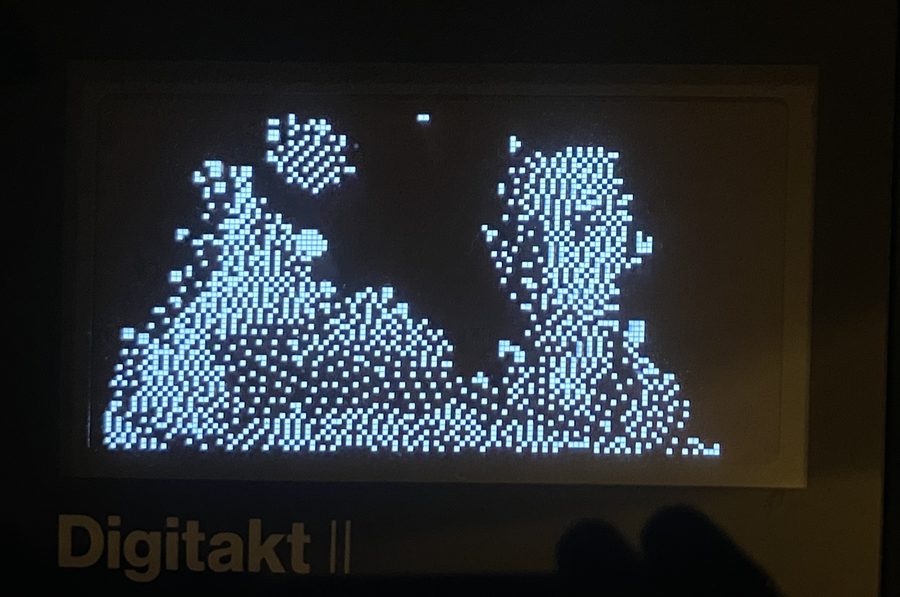 |
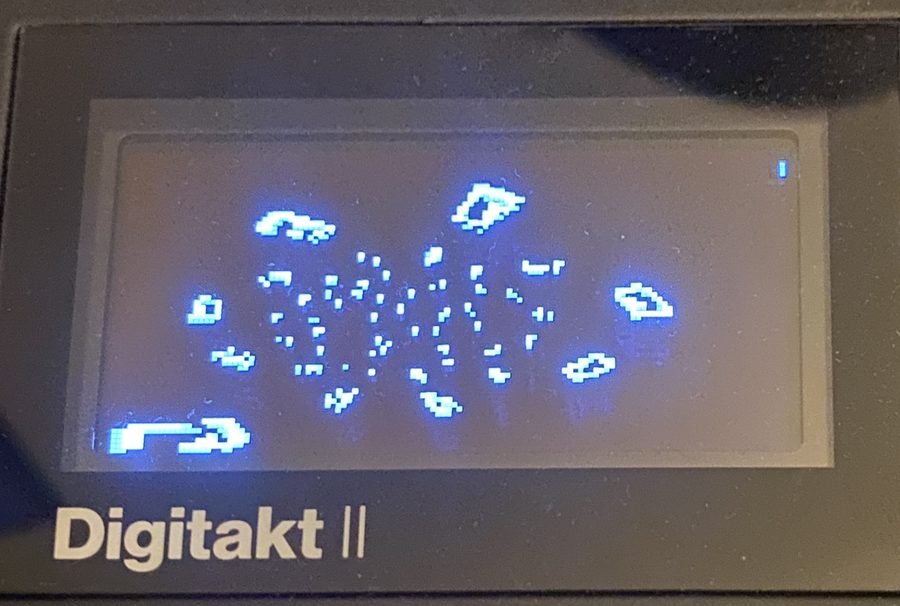
Several are animated rather than static, so a still photograph only catches one frame. Which routine draws which screen has not been pinned down, so they are not labelled here.
Why you only see one
The firmware really does choose between five boot animations. A selector reads a pseudo-random number and walks a cascade of comparisons, with nominal weights of roughly 99.9% for the usual one and a few thousandths of a percent for the other four.
Those weights never take effect, because the generator is never seeded. Its
state word is written from exactly one place in the whole image: the generator
itself. There is no srand and no other writer, so the sequence of numbers is
identical on every boot and the selector lands on the same animation every
time. The other four are unreachable on a given unit.
The patch fixes both halves of that: it equalises the weights, and it mixes a live hardware counter into the generator so the draw actually varies.
See TECHNICAL.md for the addresses and the reasoning.
What you need
- A Digitakt II OS
.syxthat you obtained yourself. None is included here. - Python 3, standard library only.
- elektron-firmware-tool by @mischa85, MIT. It handles compression and the integrity trailer, which this repository deliberately does not reimplement.
git clone https://github.com/mischa85/elektron-firmware-tool
(cd elektron-firmware-tool && make)
A flake.nix is provided if you use Nix, but nothing here needs more than
python3 and a C compiler.
Build
Put your .syx in this directory, then:
./build.sh Digitakt_II_OS1.16.syx out.syx
It decodes the SysEx transport, decompresses the sections, applies three patches to the OS section, recompresses, recomputes the checksum and the HMAC trailer, and verifies the result round trips. The pipeline is deterministic: the same input gives the same output hash.
Every patch verifies the bytes it expects before writing, and refuses to run if they do not match, so it will not silently corrupt a different firmware version.
The three patches
| Script | Bytes | Effect |
|---|---|---|
patch_equal_intro.sh | 8 | four selector thresholds, so all five are equiprobable |
patch_rng_entropy.sh | 6 | the generator's constant additive term becomes a read of a free running hardware counter |
patch_burn_first_draw.sh | 2 | discards the first draw, which the new entropy does not reach in time |
The third one is not optional. Without it you get four of the five, because the entropy enters the generator's low bits while its output samples higher ones, so the first draw after boot is still nearly fixed. That first draw is the one that selects the common animation.
Status
Tested on one instrument, on OS 1.16, by its owner. All five animations appear across restarts.
Only the OS section is modified. The bootstrap and the updater are untouched,
so the documented recovery path (hold [FUNC] at power on, then [TRIG 4] for
OS UPGRADE over MIDI DIN) still runs original code.
That is an argument, not a guarantee. Flashing modified firmware is at your own
risk and can leave a device unusable. Verify the checksum output, keep the
original .syx, and understand the recovery path before you start.
Licence
MIT for the code here. See NOTICE.md for what is deliberately excluded and why.
Digitakt and Elektron are trademarks of their respective owners. This project is independent and is not affiliated with or endorsed by Elektron.