ALN effects for disting NT
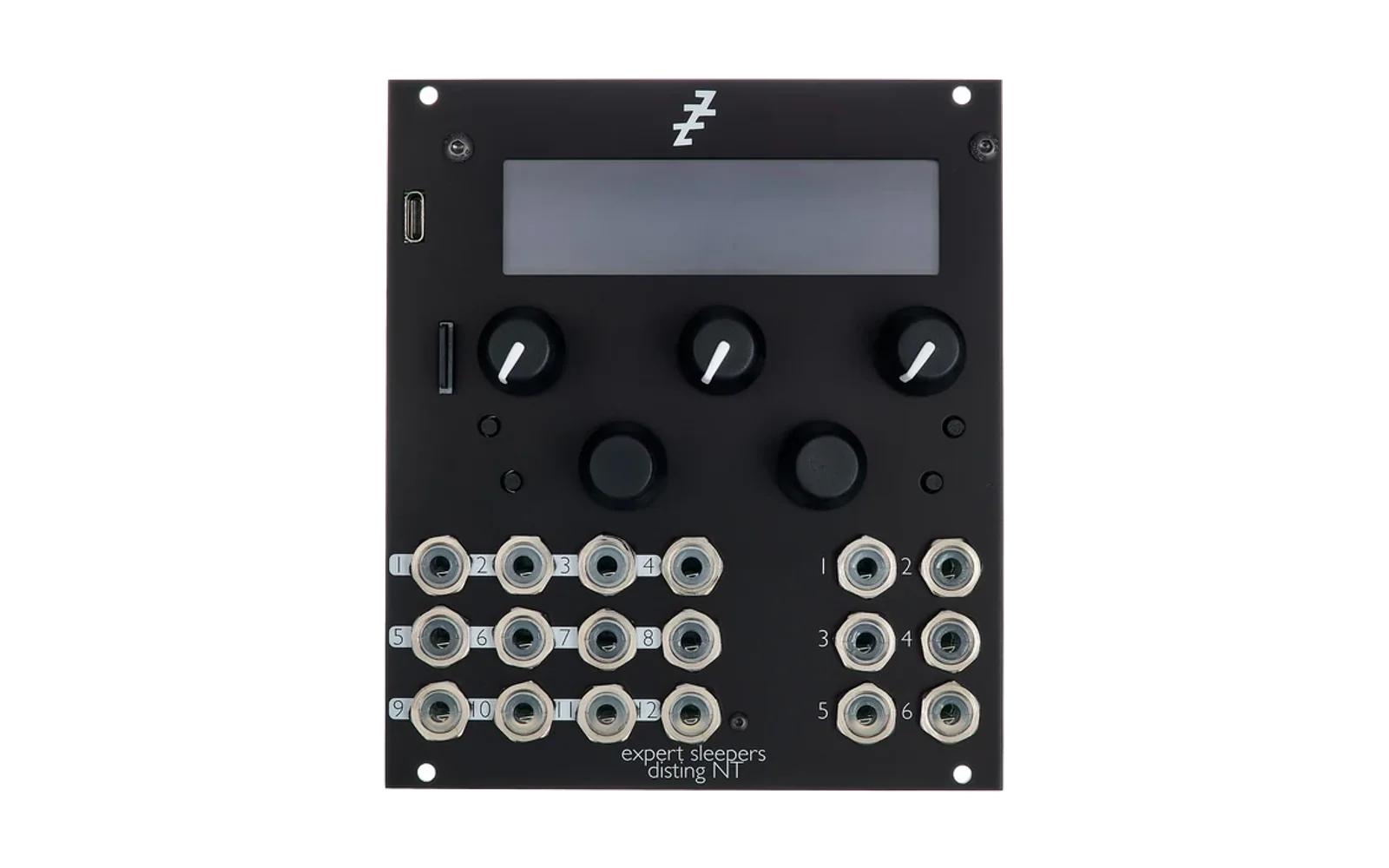
Three disting NT audio effects built from compact decision trees fitted to analog circuit simulations:
| Plug-in | GUID | What it does | Release file |
|---|---|---|---|
| ALN Fold | ThWf | Selectable Buchla 259-style and extended 16-fold wavefolders | aln_fold_wavefolder.o |
| ALN Distort | ThDb | Eight circuit-inspired distortion models | aln_distortion_bank.o |
| ALN Saturation | ThSa | Tube-stage-inspired saturation with optional bias memory | aln_saturation.o |
The learned tables are checked into this repository. The disting NT does not train a model or run Python: each audio sample follows a small fixed decision tree and evaluates one affine line per modeled path. All three effects add first-order antiderivative antialiasing around each static nonlinearity.
Install
These plug-ins use disting NT C++ API v13 and require firmware 1.15 or later.
Download either the .o file or its matching ZIP from the latest GitHub
release. Copy the object to:
/programs/plug-ins/
Rescan plug-ins or restart the module, then add the algorithm by name. Begin monitoring at a low level when trying a new nonlinear effect.
ALN Fold and ALN Distort have been loaded and auditioned on physical disting NT hardware. ALN Saturation has automated and ARM-build evidence only until its first module test. Automated checks are not a substitute for listening on a module.
Releases
One version tag builds all three plug-ins. Each GitHub release contains six assets:
aln_fold_wavefolder.oaln-fold-wavefolder.zipaln_distortion_bank.oaln-distortion-bank.zipaln_saturation.oaln-saturation.zip
The assets are separate so the three effects can have separate NT Gallery entries while sharing one source repository and one tested build.
See DEVELOPING.md for local build and release details.
Source boundary
This repository contains the real-time plug-in code, generated model tables, and releasable source netlists needed to audit every electronic teacher used by ALN Fold, ALN Distort, and ALN Saturation. It intentionally does not contain the research/training workspace or the separately supplied ALN trainer used during the experiments.
The experimental trainer was an affine-leaf regression tree, not the canonical Armstrong/Thomas MIN/MAX ALN implementation. After fitting, its breakpoint locations were distilled into the interval decision trees checked in here. The plug-in names retain “ALN” because that is the experiment they came from, not because the module runs a canonical ALN evaluator.
License
MIT. The pinned official distingNT_API submodule has its own MIT license.